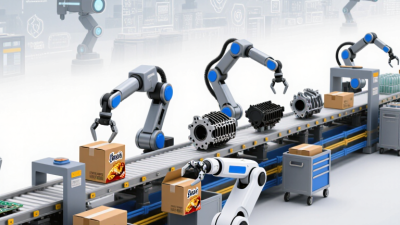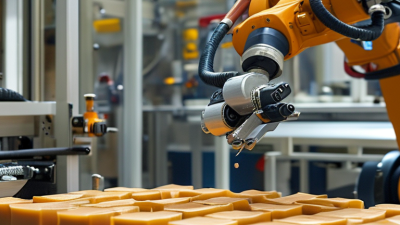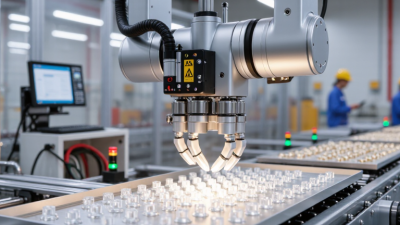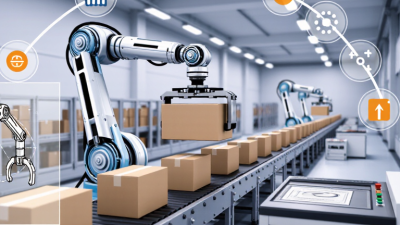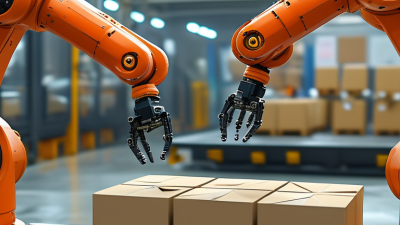

A pick and place robot is an automated machine designed to move objects between specific locations. It may transfer cartons, sort components, or position products on a conveyor. In a factory, the action can look simple: grip, lift, move, and release. Yet each movement depends on careful programming, accurate sensors, and suitable mechanical design.
The robot usually combines an arm, end-of-arm tooling, sensors, and a control system. A camera can identify an object’s position, shape, or orientation. The controller then calculates a movement path and sends commands to the robot joints. A vacuum cup may lift a smooth package, while a mechanical gripper may hold a metal part. The tool must match the object. Otherwise, products can slip, collide, or become damaged. Small details matter, including surface texture, weight, spacing, and conveyor speed.
The process is not magic. It is coordinated engineering.
This article explains how a pick and place robot works, from object detection to final placement. It also examines common robot types, gripper choices, programming methods, and workplace safety features. Practical installations are often less perfect than diagrams suggest. Dust can affect sensors, packages can arrive unevenly, and an unexpected object may interrupt the cycle. Experienced engineers therefore test real materials under real operating conditions. A reliable system needs more than impressive speed. It must provide repeatable accuracy, controlled force, easy maintenance, and safe interaction with nearby workers. Knowing these limits helps businesses choose automation that fits their process instead of forcing the process to fit the machine.
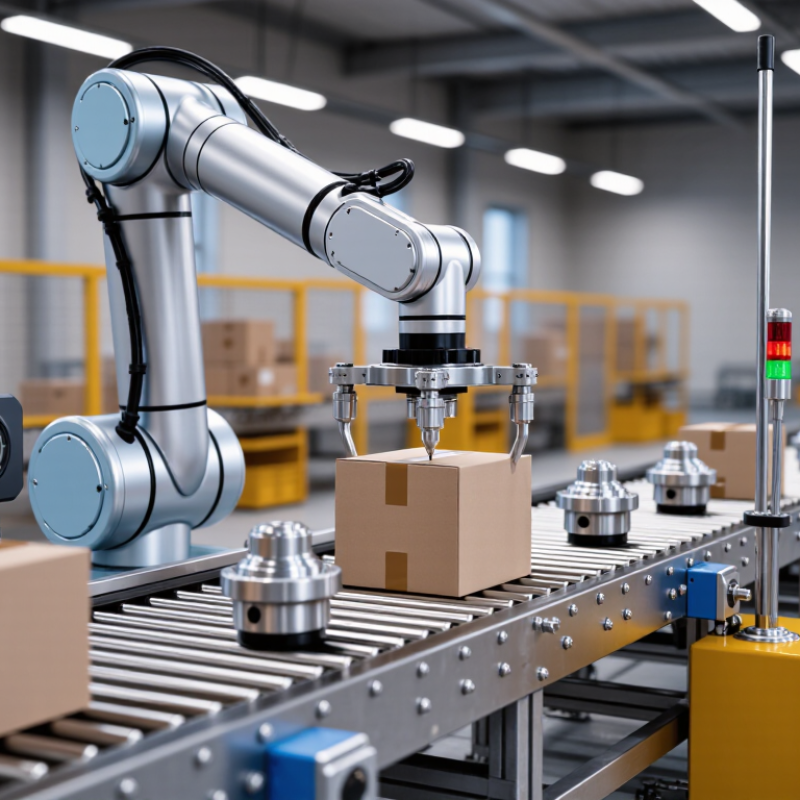
A pick-and-place robot is an automated machine designed to move objects from one location to another. It may collect a component from a conveyor and place it into a tray, carton, or assembly fixture. The object can be light, heavy, regular, or slightly irregular. Its defining task is simple: pick, move, and place. The machine repeats this process with controlled speed and accuracy.
A typical system includes a robotic arm, sensors, a controller, and an end effector. The sensors detect an object’s position, size, or orientation. The controller then calculates the movement path. The end effector grips, lifts, and releases the object. Some systems use suction, while others use mechanical fingers. During operation, the robot follows programmed coordinates and adjusts its motion when sensor data changes.
In a real production area, the process is less perfect than a diagram suggests. Dust, glare, vibration, or misplaced objects can affect detection. A reliable system therefore needs careful testing, guarded operating zones, and regular maintenance. Even a small positioning error can damage a product or interrupt the workflow. Human technicians still inspect the gripping force, timing, and safety response. The robot handles repetition well. It does not always understand unexpected situations.
A pick-and-place robot identifies an item, moves to its location, grips it, transfers it, releases it at a target position, and returns for the next cycle. The chart shows representative cycle-time benchmarks for common robot configurations used in repetitive handling tasks.
Lower cycle time means faster handling. Actual performance depends on payload, travel distance, gripper type, vision requirements, and safety settings.
What Is a Pick and Place Robot and How Does It Work?
Key Components of a Pick and Place Robot
A pick and place robot moves objects between defined locations. It identifies, grips, transfers, and releases each item. Its main components include the robotic arm, end effector, sensors, controller, and safety system. The arm supplies reach and repeatable motion. The end effector provides contact, often through vacuum cups, mechanical fingers, or magnetic tools. Tool choice depends on weight, surface texture, temperature, and product fragility.
The controller acts as the robot’s decision center. It coordinates motor commands, timing, and position data. Vision cameras can locate products on a moving conveyor. Force sensors can detect poor contact or unexpected resistance. These details matter. A shiny package may confuse a camera. A soft item may deform under excessive gripping force. Real production experience shows that perfect calibration rarely lasts all day.
According to the International Federation of Robotics’ World Robotics 2024 report, 541,302 industrial robots were installed globally in 2023. The same report recorded 162 robots per 10,000 manufacturing employees worldwide. The Association for Advancing Automation reported 31,159 robot orders in North America during 2023. These figures reflect wider automation demand, but they do not guarantee successful deployment. Layout, cycle time, payload, software integration, and operator training still decide performance. A neglected sensor can stop an otherwise advanced system.
A pick and place robot moves an object from one location to another. It usually combines a robotic arm, gripper, sensors, and control software. According to the International Federation of Robotics’ World Robotics 2024 report, 541,302 industrial robots were installed worldwide in 2023. Many support repetitive handling tasks.
The process begins with detection. A camera or sensor identifies the object’s position, shape, and orientation. The controller compares this information with programmed coordinates. It then plans a safe approach path. The arm moves toward the object at controlled speed. Near the target, motion becomes slower and more precise. The gripper closes around the item using preset force. Too little force causes slipping. Too much force may damage fragile packaging.
Next, the robot checks whether the object is secure. Some systems use pressure feedback or a second image. The arm lifts, rotates, and travels toward the destination. It places the item within a defined tolerance, then releases it. Sensors confirm successful placement before the next cycle starts. The IFR report also recorded more than 4.28 million industrial robots operating globally at the end of 2023, showing how widely automated handling is used.
Yet real floors are imperfect. Dust, reflections, vibration, and changing product positions can reduce accuracy. A cycle that works in testing may fail beside a busy conveyor. Experienced engineers therefore adjust gripper force, camera lighting, and recovery rules after observing actual production. Consistency matters more than impressive speed.
What Is a Pick and Place Robot and How Does It Work?
A pick and place robot moves items between defined locations. It uses programmed motion, sensors, and a gripping tool. A camera may locate each item on a moving conveyor. The controller then guides the arm to pick, move, and release it. In a real production line, small timing errors can cause missed picks.
Common Types and Applications of Pick and Place Robots
Cartesian robots move along straight X, Y, and Z axes. They suit packaging lines and large, regular workspaces. SCARA robots provide fast horizontal movement for electronics and small assembly tasks. Delta robots use lightweight arms for rapid food sorting and product placement. Robotic arms handle irregular products, machine tending, and palletizing. Vacuum grippers work well with smooth cartons, while mechanical fingers hold uneven parts. Vision systems improve accuracy when items arrive in different positions. However, reflective surfaces, dust, and poor lighting can still confuse detection.
Tips: Match the gripper to the product’s surface and weight. Check the robot’s reach before fixing conveyor positions. Test speed with real products, not empty trays. Leave space for maintenance access. The first layout is rarely perfect; careful observation usually reveals unnecessary movements. Operators should also record missed picks and inspect them regularly. Safety guarding, emergency controls, and risk assessments must support every installation.
A pick and place robot automatically detects, grasps, transfers, and releases objects between locations. The specifications below are representative industry ranges; actual performance depends on payload, tooling, workspace, product geometry, safety requirements, and application design.
| Robot Type | Typical Axes | Representative Payload | Typical Reach or Work Area | Typical Repeatability | Common Operating Speed | Best-Suited Applications | Main Advantages | Common Limitations |
|---|---|---|---|---|---|---|---|---|
| Cartesian Robot | 3 linear axes, with optional rotary axes | Approximately 1–500 kg, depending on frame size | Rectangular working envelope; travel can range from several hundred millimeters to several meters | Approximately ±0.02–0.10 mm | Moderate; commonly about 10–100 picks per minute | Machine tending, palletizing, packaging, loading and unloading, and material transfer | Simple programming, rigid structure, scalable travel, and good positional accuracy | Limited flexibility around obstacles and generally requires a larger supporting structure |
| SCARA Robot | Usually 4 axes | Approximately 1–20 kg | Typically 400–1,000 mm radial reach | Approximately ±0.01–0.05 mm | Often about 30–100 picks per minute, depending on payload and travel distance | Small-part assembly, electronic component handling, screwdriving, packaging, and sorting | Fast horizontal movement, high repeatability, compact footprint, and strong vertical rigidity | Less capable of reaching around complex three-dimensional obstacles than articulated robots |
| Delta Robot | Usually 3 or 4 axes | Approximately 0.1–5 kg | Typically 600–1,600 mm working diameter, depending on configuration | Approximately ±0.05–0.20 mm | Commonly about 60–200 picks per minute in high-speed applications | Food handling, primary packaging, sorting, inspection, and lightweight product transfer | Very high cycle speed, low moving mass, and efficient overhead operation | Limited payload, restricted orientation capability, and reliance on a suitable conveyor and vision system |
| Six-Axis Articulated Robot | 6 rotary axes | Approximately 2–300 kg | Approximately 500–3,000 mm reach, depending on robot size | Approximately ±0.02–0.10 mm | Often about 10–60 picks per minute | Machine tending, case packing, palletizing, welding-related handling, and complex part orientation | High flexibility, broad three-dimensional reach, and the ability to approach objects from many angles | More complex programming, larger safety requirements, and generally lower speed than delta robots |
| Gantry Robot | 3 or more linear axes | Approximately 50–2,000 kg or more in customized systems | Large rectangular workspaces that can extend across production lines | Approximately ±0.05–0.50 mm | Moderate; optimized for long travel and heavy loads rather than maximum cycle rate | Heavy palletizing, warehousing, large-part handling, container loading, and production-line transfer | High payload capacity, extensive coverage, and efficient use of overhead or floor-mounted space | Large installation area, higher structural cost, and reduced flexibility for irregular layouts |
| Collaborative Robot | Usually 6 axes | Approximately 3–30 kg | Approximately 500–1,800 mm reach | Approximately ±0.02–0.10 mm | Often about 5–30 picks per minute when operating with human-access safeguards | Low-volume packaging, machine tending, inspection, kitting, and flexible workstation tasks | Relatively easy deployment, flexible reconfiguration, and suitability for selected shared workspaces | Speed and payload may be reduced by safety limits; a risk assessment is still required |
How a pick and place cycle works: the robot receives a task, locates the object using programmed coordinates or sensors, moves to the pick position, activates a gripper or vacuum tool, verifies the grip when required, transfers the object along a planned path, releases it at the destination, and returns for the next cycle.
A pick-and-place robot moves objects between defined locations. It uses cameras, sensors, software, and a mechanical gripper. The system detects an item, calculates its position, lifts it, and places it accurately. Some models repeat this cycle hundreds of times per hour.
The International Federation of Robotics reported 541,302 industrial robots installed worldwide in 2023, showing the scale of industrial automation.
The main benefit is consistent performance. Robots can sort packages, transfer components, and handle repetitive tasks without fatigue. They also reduce direct exposure to hot surfaces, sharp edges, or heavy loads.
McKinsey Global Institute estimates that about 60% of occupations contain at least 30% automatable activities. Pick-and-place systems can address part of that opportunity, especially in structured work areas.
The limitations are practical. Irregular objects can confuse vision systems. Soft products may deform under excessive gripping force. Product changes also require new programming, tooling, or camera settings. Integration costs can be significant for smaller facilities. A poorly planned system may create faster bottlenecks, not better output.
That detail is easy to miss. Maintenance, calibration, guarding, and operator training remain necessary. Performance depends on clean sensors, stable lighting, and predictable item placement. The robot is precise, but the surrounding process may not be.