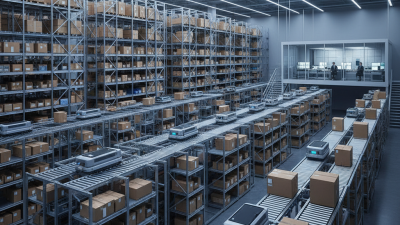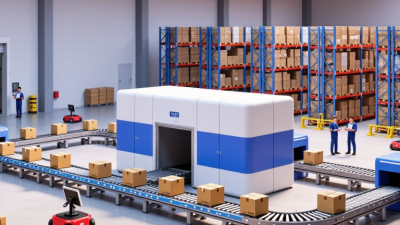

Global buyers are entering 2026 with higher expectations for speed, accuracy, and labor resilience. Automated storage solutions now extend beyond simple shelving and conveyors. They include automated storage and retrieval systems, shuttle systems, vertical lift modules, pallet solutions, and software-controlled inventory platforms. Each option changes how products move, not merely where they sit.
Industry evidence supports this shift. The International Federation of Robotics reported 541,302 industrial robots were installed worldwide in 2023, showing continued investment in automation. Warehouse robotics is not identical to factory robotics, but the direction is clear. MHI’s 2024 Annual Industry Report also identified robotics, automation, and artificial intelligence as major supply chain priorities. DHL’s Logistics Trend Radar 7.0 highlights AI, advanced robotics, and smart operations as important logistics trends. These reports offer useful signals, not purchasing instructions.
For global buyers, the hard question is fit. A compact shuttle system may suit dense consumer-goods storage, while a vertical lift module can protect small parts in limited floor space. Cold-chain facilities, spare-parts warehouses, and high-volume e-commerce sites require different designs. Total cost matters, including integration, maintenance, energy, training, and software updates. No solution wins everywhere. That assumption needs testing.
This 2026 guide compares leading automated storage solutions through capacity, throughput, scalability, safety, and supplier support. It also considers regional service coverage and data reliability. Buyers should verify every forecast against actual order profiles, building limits, and workforce conditions. Reports inform decisions. Site evidence decides them.
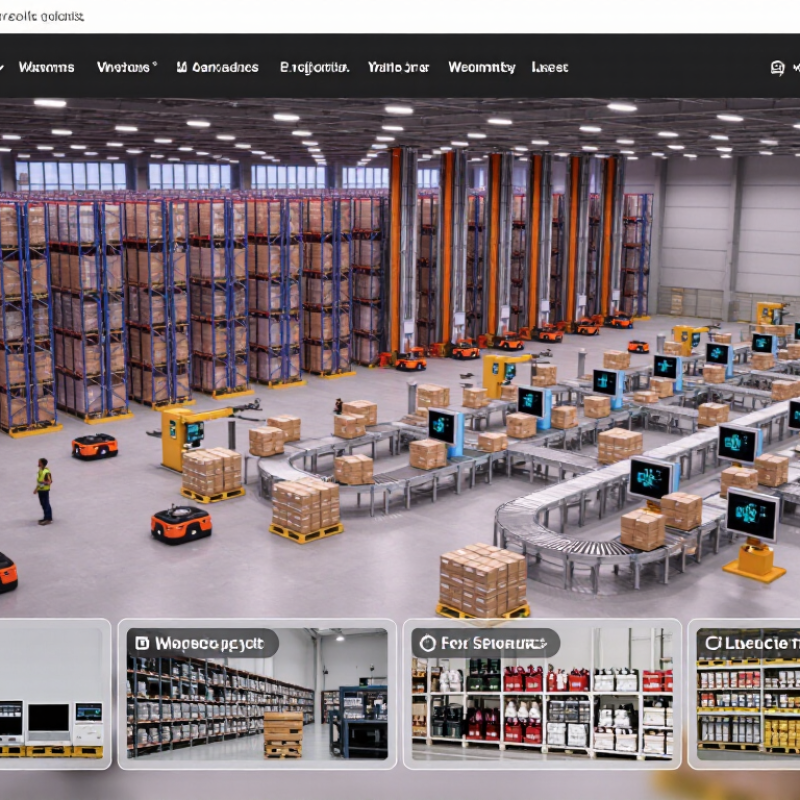
Automated storage solutions combine software, sensors, conveyors, lifts, and storage equipment. They locate, retrieve, and replenish goods with limited manual handling.
A typical system may place cartons in a dense rack, then deliver one tote to a packing station. The screen shows the location. The machine does the travel.
Global buyers need these systems because labor costs, space limits, and order volumes keep changing. The International Federation of Robotics recorded 541,302 industrial robot installations worldwide in 2023. That figure does not measure warehouse systems directly, but it confirms a wider move toward automation. MHI’s 2024 Annual Industry Report also identifies robotics and automation as major investment priorities among supply-chain organizations.
The message is practical: storage capacity alone is not enough. Buyers need accurate inventory movement.
The strongest 2026 options will include automated storage and retrieval systems, vertical lift modules, shuttle systems, and autonomous mobile robots. Selection should begin with product size, daily order lines, temperature conditions, and peak-season demand.
Integration matters just as much. A fast machine still fails when inventory data is late or inaccurate.
Buyers should request uptime records, maintenance response times, safety documentation, and total operating costs.
Cheaper equipment can become expensive after installation. That is an uncomfortable lesson.
Pilot testing is wiser than trusting a polished demonstration.
Automated storage systems are becoming more intelligent, modular, and data-driven. The MHI Annual Industry Report 2024 found that 55% of supply chain leaders increased technology investment. Many facilities are now combining shuttle systems, vertical storage, and autonomous mobile robots. These solutions can reduce walking time and improve inventory accuracy.
Artificial intelligence is changing storage decisions. Machine-learning software can forecast demand, adjust slotting, and identify slow-moving stock. Computer vision adds another control layer. It checks labels, carton positions, and damaged packaging during handling. The International Federation of Robotics reported 541,302 industrial robots were installed globally in 2023. Storage automation is not isolated from this wider robotics shift.
Digital twins are also gaining attention. They allow buyers to test throughput, congestion, and labor changes before installation. Interoperability matters more than impressive machinery. A warehouse may contain excellent equipment, yet poor data connections can create delays. Cybersecurity, energy consumption, and local maintenance skills deserve equal attention. These details are often missed during purchasing.
Faster is not always better. A system designed for peak season may remain underused for most of the year. Global buyers should compare real order profiles, aisle dimensions, temperature conditions, and expansion plans. Forecasts can be wrong. That weakness should be measured, not hidden. The best 2026 solution may be a phased system with clear performance data and room for correction.
2026 Top Automated Storage Solutions for Global Buyers
Automated storage choices should follow inventory behavior, not showroom appeal. AS/RS delivers excellent vertical density, controlled access, and predictable throughput. It suits stable SKU profiles, high volumes, and facilities with tall clear heights. However, construction tolerance, fire planning, and maintenance access can raise the total investment. The International Federation of Robotics reported 541,302 industrial robot installations worldwide in 2023. That figure signals strong automation momentum, but it does not guarantee a warehouse return.
Shuttle systems offer modular storage for cartons, totes, or pallets. They can expand by adding lanes, carriers, or lifts. This flexibility helps businesses manage seasonal demand. Carousels support goods-to-person workflows and reduce walking around compact picking zones. They work well for small items, frequent orders, and ergonomic handling. Robotic storage provides greater flexibility for changing layouts and mixed product dimensions. Yet integration, vision accuracy, charging, and exception handling require careful testing. No solution wins every time.
MHI’s 2024 Annual Industry Report projects robotics and automation adoption to reach 50% within five years. Global buyers should compare storage density, order lines per hour, SKU turnover, peak demand, and software compatibility. A practical pilot should include damaged cartons, dust, replenishment delays, and operator training. The perfect simulation is still incomplete. That limitation deserves attention.
2026 Top Automated Storage Solutions for Global Buyers
Choosing an automated storage solution starts with evidence, not impressive equipment images. Measure current inventory, peak order volume, product dimensions, and available floor space. Capacity should reflect usable storage locations, not only the advertised maximum. A high-density system may hold more goods, but poor access can slow picking. Throughput must match real operating patterns, including morning surges and seasonal demand. Ask for tested cycles per hour under conditions similar to your facility. Integration also matters. Confirm compatibility with warehouse software, barcode systems, conveyors, and existing safety controls. A smooth data exchange is more valuable than a technically advanced machine that works alone.
Tips: Request site-specific calculations. Test sample loads. Review maintenance response times. Check training requirements. Ask how performance changes during software downtime. Small gaps often become daily costs.
ROI should include installation, energy use, service contracts, labor changes, and future expansion. Compare these costs with measurable gains, such as reduced travel distance, fewer picking errors, and improved space utilization. Use conservative assumptions. A forecast based on perfect uptime is attractive, but rarely reliable. One facility may recover its investment quickly, while another may need several years. My experience suggests that the weakest input often shapes the final result. Therefore, buyers should request reference data, acceptance criteria, and a phased implementation plan. Leave room for manual handling during unexpected disruptions. Automation is powerful, but it is not magic.
| Solution Type | Best-Fit Use Case | Typical Load Profile | Storage Capacity and Density | Typical Throughput | Space and Height Requirements | Integration Complexity | Indicative Investment Level | Typical Payback Range | ROI Considerations |
|---|---|---|---|---|---|---|---|---|---|
| Vertical Lift Module | High-value small parts, maintenance items, tools, electronics, and order-picking operations with limited floor space. | Individual items, totes, trays, and cartons; commonly up to approximately 500 kg per tray depending on configuration. | Usually 40–90% less floor area than conventional shelving for the same inventory; practical heights commonly range from 3–15 m. | 20–80 storage or retrieval transactions per hour per machine | Uses vertical building space; requires a level floor, service access, and suitable ceiling clearance. | Medium; normally connects to warehouse management, inventory, barcode, and user-authentication systems. | Medium to high | 2.5–5 years | Strong value where labor travel, floor-space cost, item security, and ergonomic picking are important. |
| Vertical Carousel | Fast access to small and medium-sized parts, documents, tools, and frequently handled inventory. | Bins, trays, garments, spare parts, and small cartons; typically lower load weight per carrier than vertical lift modules. | Often reduces floor footprint by 60–80% compared with horizontal shelving; common equipment heights are approximately 2.5–10 m. | 30–120 transactions per hour per machine | Compact floor footprint with moderate vertical clearance; suitable for facilities where aisle reduction is a priority. | Low to medium; can operate with a standalone control system or connect to warehouse software. | Medium | 2–4 years | Attractive for repetitive picking, secure storage, reduced walking distance, and improved inventory accuracy. |
| Horizontal Carousel | High-volume piece picking in order-consolidation zones, spare-parts warehouses, and apparel or e-commerce operations. | Small cartons, totes, bins, and individual items; usually light to medium loads. | Can provide approximately 25–50% more usable storage than static shelving in the same work area when arranged in a workstation pod. | 100–400 picks per hour per operator workstation | Requires a relatively large floor area but reduces picker travel and can use low or medium ceiling heights. | Medium; effective integration requires order batching, inventory control, pick-to-light, and workstation software. | Medium | 1.5–3.5 years | Best ROI is achieved in steady, repetitive order profiles with many picks per hour and short travel distances. |
| Mini-Load AS/RS | Automated storage and retrieval of totes, cartons, trays, and small cases in manufacturing, distribution, and spare-parts facilities. | Standard totes or cartons, generally from 5–50 kg per load; load dimensions must be standardized. | High-density storage in racks commonly 6–25 m high; can substantially reduce aisle space compared with manual shelving. | 100–600 single-load cycles per hour per aisle, depending on crane and workstation design | Requires accurate rack alignment, controlled floor flatness, fire protection coordination, and sufficient structural height. | High; normally requires warehouse control software, warehouse management integration, equipment interfaces, and host-system testing. | High | 3–7 years | High potential where SKU count, order frequency, labor cost, and inventory accuracy justify centralized automation. |
| Pallet AS/RS | High-bay pallet storage for manufacturing plants, cold-chain facilities, distribution centers, and buffer stock. | Standard pallets or unit loads; commonly 500–1,500 kg per storage position, subject to equipment and rack design. | Typical rack heights range from 15–40 m; provides high cubic utilization and can reduce required building footprint. | 30–150 pallet movements per hour per aisle | Requires high clear height, engineered flooring, rack protection, fire-safety design, and strict pallet quality control. | High; integration usually includes WMS, WCS, conveyor controls, ERP interfaces, and automated identification systems. | Very high | 4–9 years | Most compelling when pallet movements are predictable, land or building costs are high, and 24/7 availability is valuable. |
| Shuttle-Based AS/RS | High-density tote, carton, or pallet storage requiring scalable throughput and flexible lane or zone expansion. | Totes, cartons, cases, or pallets depending on shuttle design; loads must meet defined dimensional and weight limits. | High-density multi-deep storage; commonly uses 6–20 m rack structures and can expand by adding shuttles, lifts, or lanes. | 200–1,000+ tote or carton movements per hour; pallet systems vary by layout | Efficient use of floor area and building height; requires accurate load dimensions and coordinated conveyor interfaces. | High; requires advanced control logic, WMS/WCS connectivity, traffic management, and system simulation before deployment. | High to very high | 3–7 years | Strong for fast growth, high SKU variety, seasonal peaks, and operations that need modular capacity expansion. |
| Autonomous Mobile Robot Goods-to-Person | E-commerce, retail replenishment, spare parts, and mixed-SKU order fulfillment where flexibility is more important than fixed infrastructure. | Totes, shelves, cartons, and bins; load limits commonly range from 100–1,500 kg depending on robot class. | Typically improves usable floor capacity by 20–50% through dense mobile storage and reduced fixed aisles. | 100–600 picks per hour per workstation, depending on SKU mix and workstation design | Requires a relatively flat floor, charging areas, safety zones, and sufficient space for robot traffic and operator stations. | Medium to high; integration includes fleet management, WMS, order orchestration, safety controls, and wireless infrastructure. | Medium to high | 2–5 years | Offers flexible scaling and faster deployment; ROI depends heavily on order variability, labor availability, and workstation utilization. |
| Automated Case Handling System | Case-level receiving, buffering, sortation, replenishment, and outbound fulfillment in high-volume distribution operations. | Standard cases and cartons with controlled dimensions, weights, barcodes, and packaging quality. | Capacity depends on the combination of conveyors, buffer lanes, sorters, and storage modules; high throughput may require significant floor area. | 500–5,000+ cases per hour per processing line | Requires planned conveyor routes, maintenance access, accumulation zones, safety guarding, and electrical capacity. | High; requires real-time synchronization among WMS, WCS, sortation, conveyors, scanners, and shipping systems. | High to very high | 3–8 years | Suitable for stable, high-volume flows; utilization and packaging standardization are critical to financial performance. |
| Evaluation note: Figures are realistic planning ranges for preliminary comparison, not guaranteed performance. Actual capacity, throughput, investment, and payback depend on SKU dimensions, load weights, order profiles, labor rates, building costs, operating hours, software scope, safety requirements, local construction standards, and implementation quality. For a reliable ROI model, compare total cost of ownership over 5–10 years, including equipment, software, integration, maintenance, energy, training, downtime, and future expansion. | |||||||||
Global sourcing involves more than comparing equipment prices. Buyers should verify steel quality, control-system compatibility, electrical standards, and expected throughput. Local safety codes can change the design, especially for fire protection, operator access, and emergency stops. Request factory test records, material certificates, and clear performance data. A video call cannot replace an on-site inspection. In practice, small details often create the largest delays.
Tips: Confirm import documents before payment. Ask for spare-parts lists and replacement lead times. Include acceptance tests in the contract. Specify who handles customs clearance, unloading, assembly, and commissioning. Require training materials in the local operating language. These steps sound ordinary. They prevent expensive confusion.
Installation planning should begin before shipment. Check floor loading, ceiling height, aisle clearance, network access, and power capacity with local engineers. Service terms should define response times, remote diagnostics, preventive maintenance, and software updates. Reliable suppliers provide named technical contacts and realistic escalation paths. No deployment is perfectly smooth. A missed measurement or unclear interface can stop an entire project. Buyers should also review cybersecurity controls and data ownership, even when the system operates inside a private warehouse. Some specifications may need revision after a real site survey. That is not failure; ignoring the revision is.