
China has become the world’s largest industrial robot market, making the choice of a reliable robot arm manufacturer increasingly important. According to the International Federation of Robotics’ World Robotics 2024 report, Chinese factories installed 276,288 industrial robots in 2023. This represented about 51% of global installations. China also reached approximately 470 robots per 10,000 manufacturing employees. The figures show strong demand, but they do not automatically prove equal quality among suppliers.
This guide examines leading Chinese manufacturers, including Siasun, Estun, Inovance, Efort, STEP, and JAKA. Their product ranges cover welding, palletizing, assembly, machine tending, and collaborative automation. Some companies focus on heavy six-axis robots, while others develop compact systems for electronics and small-batch production. A useful comparison must consider payload, reach, repeatability, controller stability, software integration, service coverage, and spare-part availability. The cheapest robot arm may become expensive when downtime reaches a full shift.
Factory experience matters. A packaging line may need a fast four-axis robot, while automotive welding requires rigid arms, accurate positioning, and dependable thermal protection. However, no ranking is completely objective. Public performance data can be uneven, and customer results often depend on integration quality. Therefore, this overview combines manufacturer information, reported market data, application experience, and practical selection criteria. It aims to identify credible suppliers, not simply repeat the most visible brand names. Some conclusions may change as export capability, artificial intelligence, and domestic component quality continue to develop.
A leading robot arm manufacturer in China is defined by more than production volume or attractive pricing. It combines mechanical engineering, control software, and dependable factory support. Engineers should explain payload, reach, repeatability, cycle time, and operating temperature in clear terms. Vague specifications create expensive mistakes.
Proof matters. A reliable manufacturer can provide test records, sample programs, and traceable quality checks. Its factory should inspect gearboxes, servo systems, wiring, and safety circuits before shipment.
Practical experience also appears in installation guidance. Technicians should help customers position the arm, tune motion paths, and reduce vibration on the production floor. They should discuss maintenance intervals and spare-part availability without hiding limitations.
No supplier is perfect. A robot may lose efficiency in dusty conditions or struggle with an unusually flexible tool. That reality deserves honest discussion. A strong manufacturer tests realistic workloads, not only ideal demonstrations. It studies failure reports and improves designs over time. Documentation should include electrical drawings, operating limits, training materials, and response procedures. Independent certifications and consistent audit results can strengthen trust, but they do not replace field evidence. The best evaluation often comes from visiting an operating installation and speaking with its technicians. Their comments may reveal small delays, difficult software settings, or useful design improvements that brochures rarely mention.
China’s robot arm industry has moved from limited assembly to a broad manufacturing ecosystem. Demand from automotive, electronics, metalworking, and logistics accelerated this change.
According to the International Federation of Robotics’ World Robotics 2024 report, China installed 276,288 industrial robots in 2023. That represented about 51% of global installations, despite a year-on-year decline. Its operational robot stock reached approximately 1.75 million units. These figures show scale, but scale alone does not guarantee technical leadership.
Development has also become more domestic. The same report stated that Chinese robot suppliers held about 47% of the local market in 2023. Local manufacturers now produce articulated arms, controllers, servo systems, and machine-vision packages. Public industrial programs helped strengthen research, supply chains, and factory adoption. Robot density reached roughly 470 units per 10,000 manufacturing workers in 2023, according to IFR data. That is a major improvement. Still, performance can vary sharply between manufacturers, especially in precision, software stability, and after-sales support. I have found that a lower purchase price may hide integration costs, training needs, or longer commissioning time. The industry is advancing quickly, but unevenly. Future competition will depend less on arm mechanics alone and more on reliable software, safe human-machine collaboration, energy efficiency, and consistent service across smaller factories.
China’s annual industrial robot installations rose substantially from 2017 to 2023, with particularly strong growth after 2020. The figures show industry-wide demand and do not represent any individual company or brand.
Unit: installed industrial robots. Source: International Federation of Robotics, World Robotics reports.
Chinese robot arm manufacturers serve different factory needs rather than one universal market. Some specialize in SCARA arms for fast assembly, screwdriving, and electronic inspection. Their compact frames suit narrow production cells. Others focus on six-axis arms for welding, polishing, machine tending, and complex handling. These models often provide broader movement and higher payload options.
Collaborative arm makers emphasize safer human-machine workflows and quick programming. Delta arm specialists target high-speed sorting, packaging, and food processing. Several engineering companies also develop palletizing systems with vision cameras, custom grippers, and conveyor integration. In practical projects, the arm is only one part of the result. Controller stability, spare parts, software support, and local installation experience matter just as much. Some product pages sound impressive, but field data can be limited. That deserves careful review.
Tips: Compare payload at full reach, not only the headline rating. Request cycle-time tests using your actual workpiece. Check repeatability, safety documentation, training, and service response times. A factory visit helps, although it may not reveal long-term maintenance issues. Ask for references from similar industries. Then test the complete cell before signing a large order.
When comparing Chinese robot arm manufacturers, avoid ranking them by catalog size alone. The better question is fit. Check payload, reach, repeatability, cycle time, and mounting options against your actual workstation. Ask for test results from a task resembling yours. A polished showroom demo proves little. Request video of sustained operation, not one perfect movement. Small details matter. Inspect cable routing, joint seals, gripper compatibility, and controller recovery after an emergency stop. Fit beats fame.
Factory evidence should be practical and verifiable. Ask whether the manufacturer builds key joints in-house or relies on outside suppliers. Review quality records, calibration methods, and final inspection procedures. Request customer references from similar industries, preferably with machines running for at least one year. Their answers reveal support maturity. Clarify response times, spare-part stock, remote diagnostics, training, and commissioning responsibilities. A low purchase price may hide integration labor, software fees, or difficult maintenance. I have seen comparisons fail because teams measured the arm, but ignored the cell around it.
Evaluate safety documentation and export compliance for your destination. Check risk assessments, manuals, electrical documents, and language support before signing. Ask for a realistic total-cost estimate over five years. Include installation, grippers, fixtures, programming, service visits, and downtime. Do not accept vague promises. Put performance targets and acceptance tests in writing. I would also run a pilot with representative materials. Pilot runs help. They may expose weaknesses early, which is useful even when the result disappoints.
| Comparison Dimension | SCARA-Focused Manufacturer | Six-Axis Industrial Manufacturer | Collaborative Robot Manufacturer | Compact Articulated Robot Manufacturer |
|---|---|---|---|---|
| Primary Robot Type | SCARA robots for horizontal assembly, pick-and-place, inspection, and screwdriving | Six-axis robots for welding, material handling, palletizing, painting, and machine tending | Collaborative robot arms designed for operation near trained personnel | Small six-axis robots for light assembly, laboratory work, electronics, and education |
| Typical Payload Range | 3–20 kg | 6–500 kg | 3–25 kg | 3–20 kg |
| Typical Maximum Reach | 400–1,200 mm | 600–3,200 mm | 500–1,900 mm | 500–1,700 mm |
| Typical Repeatability | ±0.01–0.02 mm | ±0.02–0.08 mm | ±0.02–0.05 mm | ±0.02–0.05 mm |
| Common Operating Speed | High-speed horizontal motion; cycle time is commonly specified by application and payload | Moderate to high speed, optimized for payload, reach, and process stability | Speed is commonly limited by collaborative safety settings and risk assessment | Moderate speed for flexible handling and small-part assembly |
| Typical Degrees of Freedom | 4 axes, usually with vertical Z-axis and rotary wrist motion | 6 axes for full three-dimensional orientation and process flexibility | 6 axes for flexible positioning and tool orientation | 6 axes for compact multi-directional movement |
| Best-Fit Applications | Electronics assembly, dispensing, loading, sorting, testing, and packaging | Automotive components, metalworking, welding, palletizing, casting, and heavy material handling | Small-batch assembly, inspection, packaging, screwdriving, polishing, and machine tending | Laboratory automation, education, light assembly, quality inspection, and small-part handling |
| Installation Requirements | Usually requires a guarded cell or restricted operating area; floor, wall, or overhead mounting may be available | Typically requires engineered guarding, safety interlocks, floor reinforcement, and process-specific equipment | Can use a smaller footprint, but a documented collaborative risk assessment remains necessary | Suitable for compact cells, benches, mobile bases, or dedicated workstations |
| Controller and Integration | PLC, vision, conveyor tracking, pneumatic tooling, and fieldbus integration are commonly available | Supports PLCs, welding systems, vision, positioners, safety systems, and industrial fieldbus networks | Often supports graphical programming, hand-guiding, Ethernet communication, PLCs, and vision systems | Usually supports teach pendants, graphical programming, digital I/O, and common communication protocols |
| Common Communication Interfaces | Ethernet/IP, PROFINET, Modbus TCP, RS-485, digital I/O, and manufacturer-specific interfaces | Ethernet/IP, PROFINET, DeviceNet or CAN-based interfaces, Modbus TCP, and digital I/O | Ethernet-based APIs, Modbus TCP, TCP/IP, digital I/O, and selected industrial protocols | Ethernet, Modbus TCP, RS-485, digital I/O, and optional vision or sensor interfaces |
| Typical Protection Ratings | Often IP20 for the body and higher IP ratings for selected joints or protected variants | Commonly IP54–IP67 depending on the arm section, process, and environmental option | Often IP54 or higher; washdown and cleanroom versions must be specified separately | Usually IP20–IP54, with higher protection available on selected models |
| Safety and Compliance Checks | Verify applicable GB/T and ISO requirements, emergency-stop functions, guarding, and machine-level risk assessment | Verify ISO 10218, ISO 13849 or equivalent safety design, guarding, interlocks, and application-specific compliance | Verify ISO/TS 15066-related collaborative requirements, power-and-force limits, safety functions, and risk assessment | Verify machine integration safety, emergency-stop performance, workspace limits, and applicable regional requirements |
| Typical Delivery Structure | Robot arm, controller, teach pendant, cables, and optional gripper or vision package | Robot arm, controller, pendant, cables, mounting hardware, and process-specific tooling or positioner | Robot arm, controller, tablet or pendant, cables, mounting kit, and optional end-of-arm tooling | Robot arm, controller, cables, teaching device, and optional compact gripper or vision package |
| Key Evaluation Criteria | Cycle time, repeatability, controller compatibility, cleanroom options, and spare-parts availability | Payload at wrist, inertia, reach, duty cycle, process package, service network, and safety documentation | Ease of programming, safety functions, force control, payload at full reach, ecosystem, and training support | Footprint, payload-to-reach ratio, software usability, teaching method, and total integration cost |
Data note: The figures shown are representative published specification ranges commonly found across Chinese robot-arm product categories. Exact performance depends on the model, payload, wrist inertia, motion profile, tooling, environmental option, and controller configuration. Request the latest datasheet, compliance documents, sample-cycle test, warranty terms, and service commitments before purchasing.
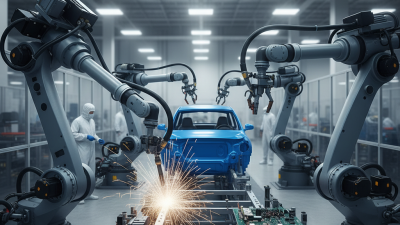
China’s top robot arm manufacturers are moving beyond basic handling toward connected, flexible production. Their systems support automotive, electronics, metalworking, logistics, and medical-device assembly. In factories, six-axis arms weld frames, place circuit boards, and load CNC machines through long shifts. Performance depends on repeatability, cycle time, payload, and integration quality. Real projects also reveal limits. A powerful arm can underperform when vision systems, grippers, or software are poorly matched. Buyers should assess the complete work cell, not the arm alone.
Industrial demand is encouraging Chinese suppliers to develop collaborative arms, compact motors, machine vision, and cloud-based monitoring. Artificial intelligence may help arms recognize mixed parts and adjust movement paths. However, reliable automation requires more than advanced algorithms. Engineers must test guarding, emergency stops, data security, and maintenance access in real conditions. Digital twins can shorten commissioning, while predictive maintenance may detect unusual vibration early. These benefits remain uneven. Smaller factories may lack clean data, skilled technicians, or upgrade budgets. That gap deserves more attention.
Tips: Define the task before comparing suppliers. Record payload, reach, cycle time, surface conditions, and operator interaction. Request a sample test with actual parts. Check training, spare-part response, documentation, and software compatibility. Verify relevant safety requirements independently. Leave room for manual adjustment. Perfect automation is still a questionable promise in dusty, changing workshops.