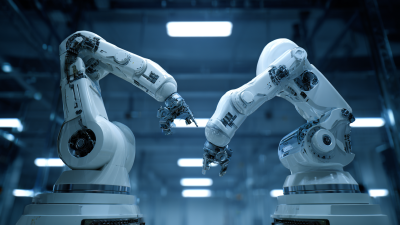
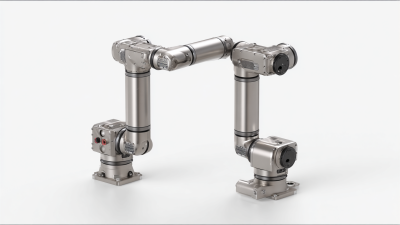
Top 7 Manufacturing Robots Revolutionizing the Industry in 2023
As we delve into the transformative landscape of the manufacturing sector in 2023, the introduction of advanced manufacturing robots stands at the forefront of this evolution. According to Dr. Emily Chen, a leading expert in robotics and automation, "Manufacturing robots are not just enhancing productivity; they are redefining what it means to innovate and compete in the global market." This sentiment resonates deeply as industries increasingly adopt robotic solutions to address challenges such as labor shortages and rising operational costs.
The capabilities of manufacturing robots have expanded significantly, enabling greater precision, efficiency, and adaptability in production processes. Companies are leveraging these technologies not only to streamline operations but also to foster a new level of creativity and flexibility in design and manufacturing practices. In this paper, we will explore the top seven manufacturing robots that are revolutionizing the industry in 2023, highlighting their unique features and the impact they are poised to have on the future of manufacturing. As we examine these cutting-edge solutions, it becomes clear that the integration of manufacturing robots is not merely a trend; it is a strategic necessity for companies aiming to thrive in an increasingly competitive environment.

Innovative Robotic Technologies Transforming Manufacturing Processes in 2023
In 2023, the manufacturing industry is witnessing a remarkable transformation driven by innovative robotic technologies and the integration of digital twin technology. Digital twins leverage advanced simulations and high-resolution modeling, enhancing the precision of manufacturing processes and paving the way for revolutionary applications in product design and development. This capability not only improves operational efficiency but also fosters creativity and innovation within the manufacturing sector.
The European smart manufacturing market is expected to grow at a compound annual growth rate (CAGR) of 12.5%, positioning the region as the third largest in the global landscape. As robots continue to be hailed as the crown jewels of manufacturing, their research, development, and application serve as critical indicators of a nation's technological prowess. The current industrial evolution showcases how artificial intelligence (AI) and advanced robotics are reshaping employment structures and contributing to high-quality development.
**Tips:** Embrace digital twin technology in your operations to enhance design accuracy and reduce time-to-market. Continuously invest in robotics research and development to maintain competitiveness and innovate your product offerings.
Top 7 Manufacturing Robots Revolutionizing the Industry in 2023
This chart displays the increasing adoption of different types of manufacturing robots in various industries in 2023. The data reflects a significant trend towards automation and efficiency in manufacturing processes.
Key Features of the Leading Manufacturing Robots Revolutionizing Production
In 2023, the manufacturing industry is witnessing a profound transformation driven by advanced robotics technologies. Key features of the leading manufacturing robots include enhanced automation capabilities, artificial intelligence integration, and exceptional precision. For instance, according to a report by the International Federation of Robotics, the adoption of industrial robots is expected to grow by 15% annually, driven by their ability to improve efficiency and reduce operational costs. Robots equipped with AI algorithms can now adapt to variations in production lines, leading to more flexible manufacturing processes.
Another significant aspect is the development of collaborative robots, or cobots, which are designed to work alongside human operators. These robots are fitted with advanced sensors and safety mechanisms, allowing them to operate in close proximity to humans without compromising safety. According to the latest data from MarketsandMarkets, the collaborative robot market is projected to reach $12 billion by 2025, highlighting a shift towards more integrated manufacturing environments. The integration of cobots not only enhances productivity but also fosters a safer workplace by offloading repetitive and hazardous tasks from human workers. As these features become more prevalent, the manufacturing landscape is set to evolve dramatically.
Top 7 Manufacturing Robots Revolutionizing the Industry in 2023
| Robot Type |
Key Features |
Payload Capacity (kg) |
Speed (m/s) |
Applications |
| Collaborative Robot |
Safety sensors, easy programming |
10 |
1.5 |
Assembly, packaging |
| Articulated Robot |
Flexible motion, high precision |
100 |
2.0 |
Welding, handling |
| SCARA Robot |
Fast operation, compact design |
6 |
2.5 |
Pick and place, assembly |
| Delta Robot |
High speed, lightweight |
3 |
3.0 |
Food packaging, electronics |
| Mobile Robot |
Autonomous navigation, obstacle avoidance |
50 |
1.2 |
Material transport, inventory |
| Cobot Arms |
Intuitive interfaces, human-robot collaboration |
5 |
1.0 |
Testing, packaging |
| Robotic Arm |
Programmable, high dexterity |
30 |
1.8 |
Machining, assembly |
Comparative Analysis of Automation Technologies in Today's Manufacturing Landscape
The manufacturing landscape in 2023 is marked by the rapid adoption of innovative automation technologies, which are redefining operational efficiency and productivity.
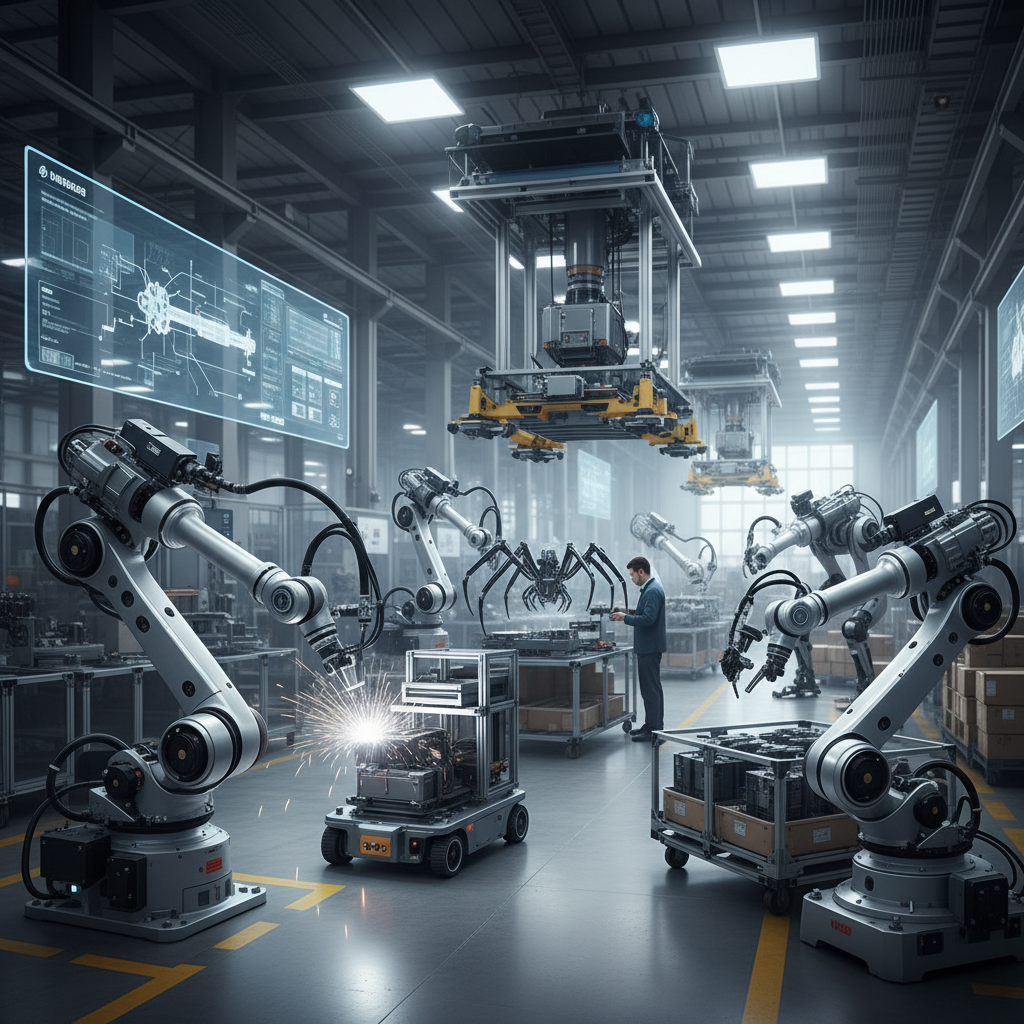 Robots equipped with advanced artificial intelligence and machine learning capabilities are at the forefront of this revolution.
These intelligent systems not only streamline traditional manufacturing processes but also enhance flexibility, enabling manufacturers to adapt quickly to market changes and customer demands.
As companies strive for greater precision and reduced downtime, the integration of robotics has become essential.
Robots equipped with advanced artificial intelligence and machine learning capabilities are at the forefront of this revolution.
These intelligent systems not only streamline traditional manufacturing processes but also enhance flexibility, enabling manufacturers to adapt quickly to market changes and customer demands.
As companies strive for greater precision and reduced downtime, the integration of robotics has become essential.
Moreover, comparative analysis reveals that collaborative robots, or cobots, are gaining traction alongside traditional industrial robots.
Unlike their more rigid counterparts, cobots are designed to work safely alongside human operators, thus enhancing workforce productivity while minimizing the risk of accidents.
This shift towards collaborative automation allows for more efficient workflows and fosters a more dynamic work environment.
As these technologies evolve, manufacturers are increasingly recognizing the importance of integrating diverse automation solutions to achieve holistic improvements in performance and sustainability.
Impact of AI and Machine Learning on Robotics in the Manufacturing Sector
The integration of artificial intelligence (AI) and machine learning into robotics has significantly transformed the landscape of the manufacturing sector. These technologies enable robots to analyze vast amounts of data and learn from their environments, allowing them to adapt their actions in real-time. This adaptability results in increased efficiency, reduced downtime, and the ability to handle complex tasks that traditional robots struggle with. Manufacturers are leveraging AI-driven robots to streamline production processes, optimize supply chain management, and enhance product quality.
Moreover, the continuous evolution of AI algorithms has led to robots capable of predictive maintenance, where they can foresee possible equipment failures before they occur. This predictive capability minimizes operational disruptions and creates a more reliable manufacturing environment. As machines become smarter, the collaboration between human workers and robots is also evolving, leading to the emergence of cobots or collaborative robots, which operate alongside humans, further enhancing productivity.
The advancing synergy between AI, machine learning, and robotics is not just revolutionizing manufacturing efficiency but also reshaping workforce roles, paving the way for a new era of industrial innovation.
Best Practices for Integrating Robots into Existing Manufacturing Operations
Integrating robots into existing manufacturing operations demands a strategic approach to maximize efficiency and minimize disruptions. As the AI-driven manufacturing market is projected to grow exponentially, companies must adopt best practices to ensure seamless integration. One effective strategy is to conduct a thorough analysis of current workflows and identify areas where robotic automation can provide the greatest benefit. This involves not only understanding the physical processes but also considering the potential impact on workforce dynamics.
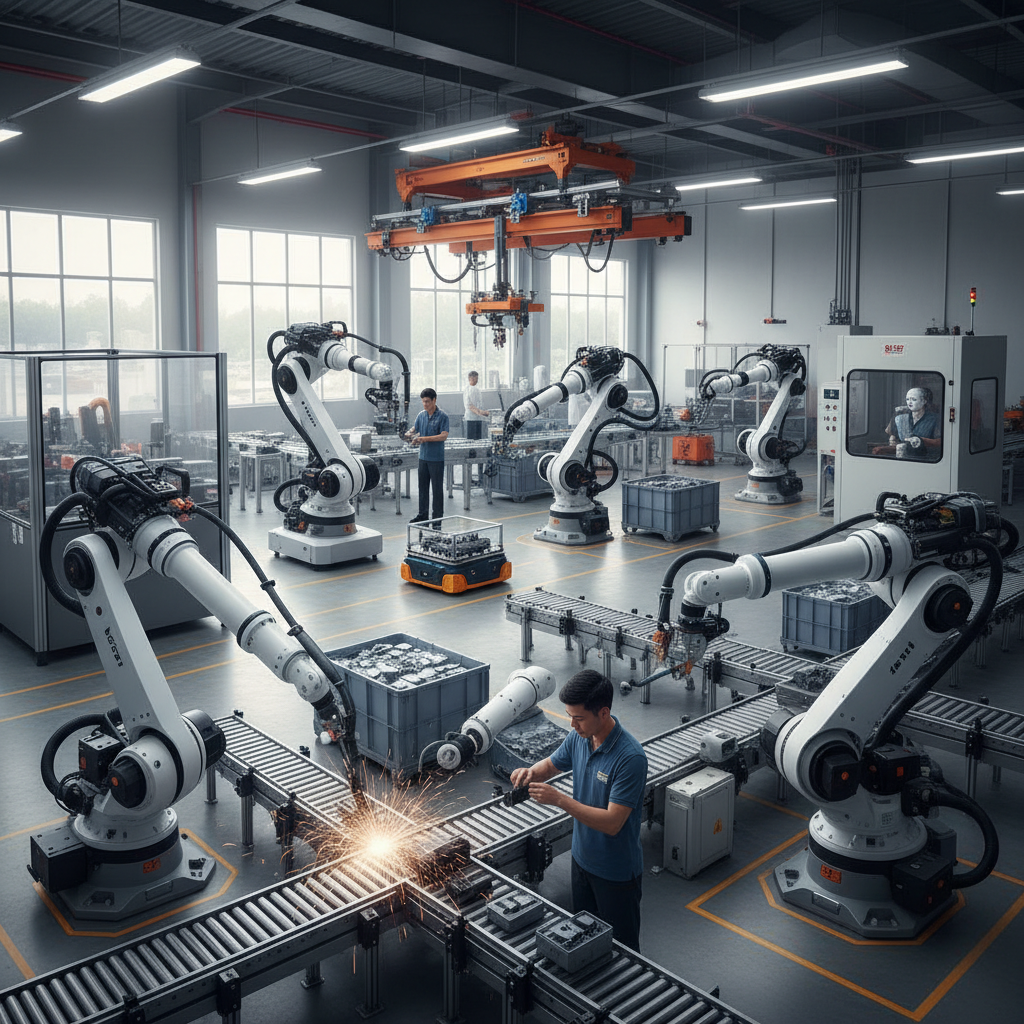
Training and reskilling staff to work alongside robots is another crucial aspect of successful integration. By investing in employee education, businesses can foster a collaborative environment where human workers complement the capabilities of robots. Furthermore, continuous monitoring and adaptation of automation systems will help in optimizing performance and addressing any challenges that arise during the transition. Emphasizing communication between human operators and robotic systems will enhance operational efficiency, paving the way for a future where advanced robotics are an integral part of manufacturing processes.