


Top Wall Mount Server Rack Manufacturers in China
Choosing a Wall Mount Server Rack manufacturer in China requires more than comparing prices and product photos. It demands practical judgment. Cabinet depth, steel thickness, ventilation, cable access, and load capacity can determine whether a rack performs well after installation.
Neil Rasmussen, founder of APC and a respected data-center infrastructure expert, is often credited with saying, “The most efficient data center is the one that does not exist.” His point also applies to rack selection: unnecessary equipment creates cost, heat, and maintenance. A properly sized Wall Mount Server Rack can support essential networking hardware without wasting valuable floor space. Small details matter. Door swing, grounding points, removable side panels, and fan noise affect daily use.
This guide examines leading Chinese manufacturers through an experience-based lens. It considers product consistency, customization capability, testing procedures, export experience, and after-sales communication. Factory certifications are useful, but they should not be treated as complete proof. Buyers should request material specifications, sample inspections, packing images, and clear warranty terms. A polished website may hide uneven quality. That possibility deserves attention.
The listed companies may suit different projects, including small offices, surveillance systems, branch networks, and edge computing rooms. Some manufacturers focus on affordable standard cabinets. Others provide stronger enclosures, tailored dimensions, or integrated cooling accessories. No ranking is perfect. Supplier performance can change over time, and one factory may not fit every application. Careful verification remains necessary before purchase, especially when equipment will operate continuously in warm or dusty environments.
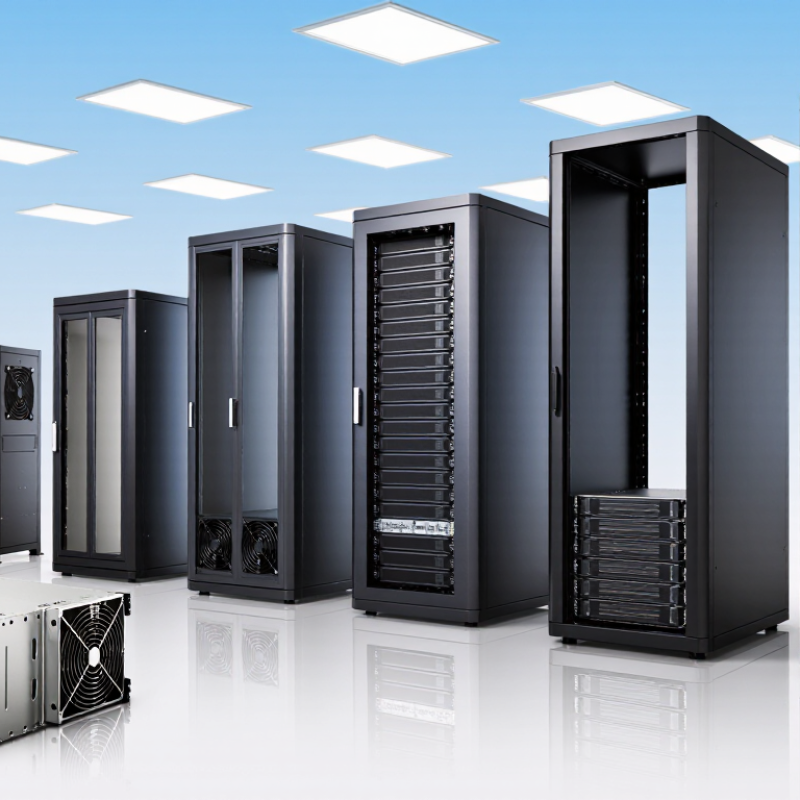
China’s Wall-Mount Server Rack Market: 19-Inch Standards and Key Demand Drivers
China’s wall-mount server rack market is shaped by a practical standard: the 19-inch mounting width. EIA-310 and IEC 60297 define compatible rack dimensions, hole spacing, and equipment fit. This common frame helps installers combine switches, patch panels, power units, and compact servers. In Chinese offices, factories, retail sites, and surveillance rooms, limited floor space remains a major demand driver. Edge computing also moves equipment closer to users. Gartner forecasts have repeatedly linked edge growth with distributed infrastructure needs, although China-specific figures vary by research method.
Market data points to continued infrastructure expansion. The China Academy of Information and Communications Technology has reported growth in data-center and computing infrastructure investment. A 2024 MarketsandMarkets report also projects global data-center physical infrastructure growth through 2029. These signals support demand for shallow, lockable cabinets with ventilation, cable entry, and higher load ratings. Yet not every wall rack should carry a server. A 12U cabinet may suit networking equipment, while a deeper 18U model needs stronger anchors and careful wall assessment. This distinction is often missed.
Tips: Check usable depth, not only rack units. Confirm EIA-310 compatibility, airflow direction, wall material, and total equipment weight. Leave service clearance around power supplies. One weakness remains: many buyers compare price before thermal design. That can create noise, heat, and maintenance problems later. Verify test documents and load data before ordering from any manufacturer.
| Market Dimension | Relevant Standard or Common Practice | What Buyers Should Check | Demand Relevance in China |
|---|---|---|---|
| 19-inch equipment mounting | Common rack equipment follows the 19-inch mounting format described in ANSI/EIA-310 and IEC 60297 standards. The nominal mounting width is 482.6 mm. | Confirm rail spacing, hole pattern, usable mounting depth, and compatibility with the intended equipment. | Supports installation of network switches, patch panels, small servers, and other standardized rack-mount equipment. |
| Rack unit height | One rack unit (1U) is 44.45 mm high. Wall-mounted enclosures are offered in different unit heights; the available range depends on the product. | Allow space for equipment, cabling, airflow, and future expansion rather than selecting capacity by equipment height alone. | Compact unit sizes suit locations where floor space is limited, including branch offices, retail sites, and communications rooms. |
| Mounting depth and enclosure format | There is no single universal depth for all wall-mount racks. Enclosure depth and usable rail depth vary by design. | Check equipment depth, connector clearance, cable bend radius, door clearance, and the wall’s available space. | Different installation environments require shallow enclosures for network gear or deeper models for compatible equipment. |
| Wall and load requirements | Permitted load depends on the rack design, mounting hardware, wall construction, and installation method; it is not determined by the 19-inch standard. | Review the manufacturer’s rated load and mounting instructions. Verify that the wall and anchors are suitable for the installed load. | Building conditions vary across commercial and industrial sites, making installation suitability an important purchasing factor. |
| Cooling and ventilation | Ventilation openings, fan provisions, and enclosure layout differ by model. Cooling needs depend on the heat output and arrangement of installed equipment. | Assess equipment airflow direction, heat load, ambient conditions, and whether active ventilation is required. | Network and edge-computing deployments can concentrate equipment in small rooms or cabinets, increasing the importance of thermal planning. |
| Security and access | Lockable doors and side panels are common options, but lock types and enclosure access features vary. | Compare door construction, lock arrangement, key management, and service access requirements. | Retail, office, education, and distributed IT sites may need to restrict access to network equipment. |
| Cable management | Cable entry points, glands, routing space, and accessory provisions are product-specific rather than fixed by the 19-inch mounting format. | Check cable entry locations, available routing space, patching access, and compatibility with cable-management accessories. | Structured cabling upgrades and network expansions create demand for enclosures that simplify installation and maintenance. |
| Materials and finish | Construction materials, sheet thickness, coatings, and corrosion protection vary by product and intended environment. | Request product specifications and confirm that the finish and construction suit the installation location. | Buyers compare durability and cost for office, commercial, and industrial applications. |
| Customization and supply | Available options may include dimensions, door styles, cable openings, colors, packaging, and accessories; availability varies by manufacturer. | Confirm drawings, tolerances, samples, production lead time, quality documentation, and export packaging before ordering. | China’s established metal fabrication and electronics supply chains support a broad range of enclosure configurations and OEM production. |
| Key demand drivers | Common application drivers include network expansion, structured cabling, distributed IT, edge computing, and space-constrained installations. | Match rack capacity and features to the deployment plan, expected equipment growth, site conditions, and maintenance needs. | These requirements support demand from telecom, enterprise, retail, education, and industrial users. |
Note: This table summarizes standards and product-selection considerations; it does not rank or identify individual manufacturers. Specifications and load ratings should be verified against the relevant product documentation.