

• Gantry Robot Manufacturer & Articulated Arm Integrator

China Top 10 Bellows Valve Manufacturers for Global Buyers

China has become a major sourcing destination for industrial bellows-sealed valves. Its manufacturers serve semiconductor plants, pharmaceutical facilities, chemical lines, vacuum systems, and energy projects. Yet choosing a supplier requires more than comparing catalog prices.

This guide examines China’s top 10 Bellow Valve manufacturers for global buyers. It considers manufacturing experience, material control, pressure testing, welding quality, certifications, customization, and after-sales support. Practical details matter. A cleanroom buyer may need electropolished stainless steel and helium leak testing. A chemical plant may require Hastelloy bellows, graphite packing, or special flange dimensions. The correct choice depends on service conditions.

Valve engineering author R. W. Miller wrote, “A valve must be selected for the service, not merely for the line size.” That principle remains useful. A polished website cannot replace traceable test records, clear drawings, and responsive technical communication.

Look closely.

The comparison also recognizes an uncomfortable truth: supplier rankings are never permanent. Production capacity can change. Export experience can vary by project. Some companies show impressive certifications but provide limited evidence of field performance. Buyers should verify factory addresses, audit documents, material certificates, and sample results before placing large orders.

This introduction provides a practical starting point, not a final purchasing decision. Each listed Bellow Valve manufacturer deserves independent evaluation against operating temperature, media, pressure, cycle frequency, installation space, and maintenance requirements. Small oversights can become expensive failures.
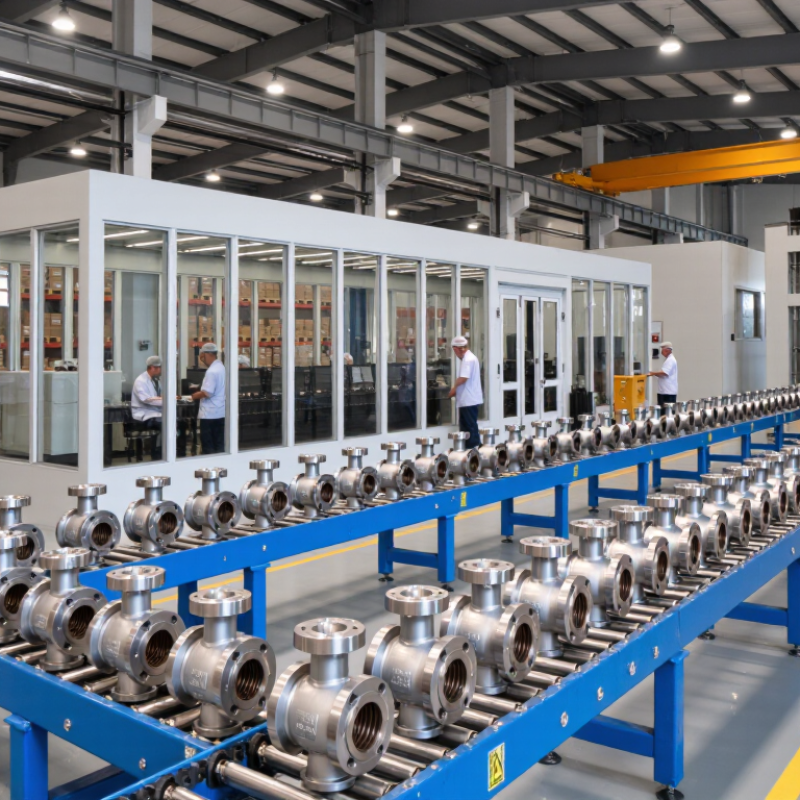
China Top 10 Bellows Valve Manufacturers for Global Buyers

Bellows Valves: Design, Functions, and Industrial Applications

Bellows Valves: Design, Functions, and Industrial Applications

Bellows valves use a sealed metal bellows to isolate the stem from the process fluid. This design reduces fugitive emissions and protects sensitive media from outside contamination. The bellows compresses and expands during operation. Its movement must remain within the rated stroke.

Inside the valve, the body, seat, stem, and bellows form one pressure boundary. Welded bellows suit demanding vacuum and high-purity service. Formed bellows can offer practical performance in less severe systems. Material selection matters. Stainless steel often handles corrosive gases, while special alloys may tolerate higher temperatures. Applications include semiconductor tools, vacuum chambers, chemical skids, pharmaceutical lines, and heat-transfer systems. A small leak can damage an entire production batch. Specifications sometimes fail because cycling data was ignored.

Tips: Check pressure, temperature, media, and cycle frequency together. Confirm the valve’s leak-test standard. Ask for material certificates and stroke-life data. Review installation orientation and cleaning requirements. Do not select by port size alone. It is an easy mistake.

For global buyers, reliable evaluation should include process controls, weld inspection, traceability, and service support. Request drawings before ordering. Compare the bellows layer design, not only the purchase price. A valve that operates smoothly during testing may still underperform after thousands of cycles. Field feedback should influence the final choice. That step is often overlooked.

Bellows Valve Pressure Classes for Industrial Service

Bellows-sealed valves use a formed metal bellows to isolate the valve stem from the process fluid, reducing fugitive emissions and protecting the stem mechanism. The chart shows nominal ASME pressure ratings at 38°C for common pressure classes; actual allowable pressure depends on valve material, temperature, and the applicable standard.

Typical applications include chemical processing, steam systems, vacuum service, toxic or hazardous media, pharmaceutical production, and other installations where external stem leakage must be minimized.

How to Evaluate China’s Top Bellows Valve Manufacturers

China’s bellows valve sector serves semiconductor, chemical, pharmaceutical, vacuum, and energy applications. Selection should begin with evidence, not catalogue claims. Fortune Business Insights valued the global industrial valves market at approximately US$79 billion in 2023. That report covers broader valve categories, not bellows valves specifically. This limitation matters.

Evaluate each manufacturer through documented engineering controls. Request material certificates under EN 10204 3.1, welding procedures, pressure-test records, and batch traceability. For critical service, ask for helium leak results and fugitive-emission testing under ISO 15848-1. Check whether the bellows are formed or welded, then review cycle-test data. A polished factory tour is not enough. Inspect calibration records, clean-room controls, and final inspection photographs. Confirm ratings at your actual temperature, pressure, and media conditions.

Market growth can encourage shortcuts. Grand View Research projects the broader industrial valves market to expand at roughly 5% annually in the coming years. That creates more suppliers, but not necessarily better reliability. Compare failure data, spare-parts availability, technical response time, and export documentation. A low quotation may conceal thinner bellows, weaker surface finishing, or incomplete testing. I would not treat price as proof of efficiency. Even experienced buyers can overvalue certificates while overlooking production consistency. Ask for a witnessed factory acceptance test and randomly select serial numbers for verification. Small details often reveal the real manufacturer.

Profiles of 10 Leading Chinese Bellows Valve Manufacturers

China Top 10 Bellows Valve Manufacturers for Global Buyers

These ten Chinese manufacturer profiles reflect different strengths in bellows valve production. One specializes in ultra-high vacuum service, while another focuses on semiconductor gas systems. Others serve petrochemical plants, pharmaceutical lines, cryogenic equipment, nuclear facilities, water treatment, and thermal power projects. Several manufacturers also provide welded bellows, orbital welding, helium leak testing, and customized end connections.

The global industrial valves market reached approximately USD 79.4 billion in 2023, according to Grand View Research. It may expand at about 4.8% annually through 2030. This growth increases demand for low-emission and contamination-resistant valve designs. Profiles serving semiconductor and pharmaceutical customers usually emphasize electropolished surfaces and controlled assembly rooms. Suppliers serving energy projects often highlight pressure cycling, fire-safe construction, and documented material traceability. Traceability matters.

MarketsandMarkets estimates the industrial valves market could approach USD 100 billion by 2028. Chinese manufacturers increasingly support export buyers with ISO 9001 systems, EN 10204 material certificates, and testing aligned with ISO 15848-1. Some profiles show strong engineering depth, especially in compact vacuum valves and high-temperature applications. Others compete through flexible minimum orders and faster machining. Public data remains uneven. A factory may claim extensive experience, yet buyers should verify test records, weld procedures, inspection equipment, and field references. That extra review is not unnecessary; it often exposes the difference between a capable manufacturer and a convincing catalog.

Comparing Quality, Certifications, Prices, and Production Capabilities

When comparing the top ten bellows valve manufacturers, quality starts with material control. Experienced buyers should check 316L stainless steel certificates, weld procedures, and bellows cycle-test records. A polished body means little if the welded diaphragm lacks traceability. Ask for helium leak results, pressure-test data, and documented inspection points. These details reveal production discipline.

Certifications need careful comparison. ISO 9001 supports process consistency, while PED, ASME, or other approvals may suit specific markets. Certificates should match the actual factory, valve series, and manufacturing location. Some suppliers present broad certificates without clear product coverage. That deserves a second look. Quality systems are valuable, but independent test reports provide stronger evidence.

Price comparisons should use identical specifications, including size, pressure class, end connection, alloy, actuator, and testing requirements. A lower quotation may exclude cleaning, packaging, spare parts, or witness inspection. Production capability also affects risk. Check CNC capacity, orbital welding equipment, clean assembly areas, monthly output, and realistic lead times. Large factories may offer stable volume, yet smaller specialists can provide closer engineering support. Neither option is automatically better. A practical shortlist should balance verified quality, valid certifications, transparent pricing, and reliable delivery performance.

China Top 10 Bellows Valve Manufacturers for Global Buyers - Comparing Quality, Certifications, Prices, and Production Capabilities

Rank Supplier Code Typical Product Focus Nominal Size Range Pressure Classes Common Materials Quality & Certification Evidence Indicative Export Price* Typical Lead Time Production Capability Best Fit
1 Supplier A Industrial and high-cycle bellows-sealed globe valves DN15–DN300
NPS ½–12
Class 150–600
PN16–PN100
Carbon steel, 304/316 stainless steel, alloy steel ISO 9001-based quality system; API/ASME documentation available by project US$180–1,650 25–45 days CNC machining, orbital bellows welding, pressure testing Power, chemical, steam systems
2 Supplier B Forged-body bellows valves for demanding service DN15–DN100
NPS ½–4
Class 800–2,500
PN63–PN420
A105, F11/F22, F304/F316, nickel alloys Material certificates, hydrostatic testing, PMI and NDE options US$260–2,400 30–55 days Closed-die forging, precision machining, multi-stage testing Refineries, boiler feed, high-pressure steam
3 Supplier C Cast-body bellows globe and stop-check valves DN25–DN500
NPS 1–20
Class 150–900
PN16–PN160
WCB, WC6/WC9, CF8M, duplex stainless steel ISO 9001 documentation; EN 10204 3.1 inspection certificates available US$220–2,800 35–60 days Investment casting, CNC finishing, shell and seat testing Large pipelines, utilities, process plants
4 Supplier D Compact bellows valves for clean and utility services DN10–DN150
NPS ⅜–6
Class 150–300
PN10–PN40
304L, 316L, carbon steel, brass trim ISO 9001-based controls; helium leak testing may be specified US$95–780 20–40 days Small-batch CNC production, clean assembly, leak testing HVAC, laboratories, general industry
5 Supplier E Cryogenic and low-temperature bellows-sealed valves DN15–DN200
NPS ½–8
Class 150–600
PN16–PN100
304/316 stainless steel, low-temperature carbon steel Low-temperature testing, material traceability, project inspection plans US$350–3,200 40–70 days Extended-bonnet fabrication, cryogenic testing, vacuum cleaning LNG, air separation, industrial gases
6 Supplier F Sanitary and high-purity bellows valve assemblies DN10–DN100
NPS ⅜–4
Up to Class 300
PN10–PN40
316L stainless steel, electropolished surfaces Surface-finish records, passivation records, hygienic design documentation US$180–1,450 30–50 days Electropolishing, orbital welding, controlled assembly Pharmaceutical, food, semiconductor utilities
7 Supplier G Low-cost standard bellows globe valves DN15–DN250
NPS ½–10
Class 150–300
PN16–PN40
WCB, 304, 316, forged carbon steel Factory pressure-test reports; third-party inspection available on request US$75–650 15–35 days Standardized machining, batch assembly, export packing OEM distribution, water and utility projects
8 Supplier H Custom severe-service and jacketed bellows valves DN25–DN400
NPS 1–16
Class 150–900
PN16–PN160
Carbon steel, stainless steel, duplex, high-alloy grades Design calculations, PMI, NDE and witness testing available by contract US$450–4,500 45–80 days Engineered-to-order fabrication and project documentation Chemical, corrosive and thermal-process service
9 Supplier I Bellows-sealed gate and globe valve packages DN25–DN600
NPS 1–24
Class 150–600
PN16–PN100
WCB, LCB, CF8M, alloy steel and stainless steel ISO 9001-based manufacturing; inspection dossiers available for EPC orders US$260–3,600 35–65 days Large-valve machining, assembly cells, hydraulic testing EPC contracts, district energy, industrial plants
10 Supplier J Small-bore instrumentation and vacuum bellows valves DN6–DN80
NPS ¼–3
Up to Class 600
PN16–PN100
316L stainless steel, nickel alloys, specialized seals Helium leak testing, dimensional reports and material traceability available US$120–1,200 25–50 days Micro-machining, fine welding, vacuum and leak testing Instrumentation, vacuum, research equipment

*Indicative export price ranges are general benchmarking estimates for standard manual bellows-sealed valves and may vary according to size, pressure rating, materials, end connections, testing, documentation, quantity, and delivery terms. Certification and production claims should be verified through current factory certificates, inspection records, samples, and a pre-shipment inspection.

How Global Buyers Can Select and Purchase the Right Supplier

Selecting the right bellows valve supplier starts with process reality, not a polished catalog. Define the medium, temperature, pressure, valve size, connection standard, cycle frequency, and leakage target. Ask how the bellows is formed, welded, and tested. Material certificates should trace wetted parts to documented batches. Request pressure, helium, and cycle-test records where applicable. A serious manufacturer explains failure modes, not only advantages. Look for qualified engineers, controlled procedures, and clear inspection plans. Independent certifications can help, but verify their scope and current status. Paperwork matters.

During purchasing, compare complete offers rather than unit prices. Include tooling, inspection, packing, spare parts, delivery terms, and after-sales response. Request a drawing for approval before production, showing dimensions, materials, weld details, and acceptance criteria. A pre-shipment inspection can catch a wrong flange or missing test report. Ask for references from similar pressure and temperature services, while protecting confidential project data. Confirm communication time zones and escalation contacts. Small details become expensive delays. We learned that a fast quotation does not prove manufacturing capacity. It is easy to overvalue polished answers. A factory visit, video audit, or sample evaluation may reveal more. Still, no supplier is risk-free. Choose the manufacturer that makes risks visible, documents decisions, and supports corrective action after delivery.