


How to Choose the Best Pivot Crane in 2026?
Choosing the best Pivot Crane in 2026 requires more than comparing lifting capacity and purchase price. Modern workplaces demand safer handling, accurate positioning, and dependable uptime. A crane that looks efficient on paper may struggle beside a crowded production line or under frequent side loading.
Market research supports this shift. Grand View Research reports continued growth in the global crane market, driven by infrastructure investment, manufacturing expansion, and warehouse modernization. MHI’s 2024 Industry Report also highlights labor shortages, automation, and operational resilience as major material-handling priorities. These findings suggest a practical direction: buyers should evaluate the complete lifting system, not only the boom and hoist.
Safety remains non-negotiable. OSHA’s overhead and gantry crane requirements emphasize rated loads, inspections, operator training, and controlled operating conditions. ASME B30.16 and ASME B30.26 provide additional guidance for hoists and rigging hardware. Standards do not replace engineering judgment. They support it.
A reliable selection process starts with real measurements. Record the maximum load, lift frequency, working radius, floor condition, ceiling height, and available swing clearance. Imagine a 500-kilogram motor moving past a finished workbench. A small clearance error can become an expensive interruption.
The right Pivot Crane should match the application, not merely exceed the advertised capacity. Consider corrosion exposure, duty classification, rotation range, mounting structure, controls, maintenance access, and spare-parts support. Energy use matters too, especially in facilities tracking emissions and operating costs.
No checklist is perfect. Field experience may reveal constraints that drawings miss. This guide combines recognized standards, market evidence, and practical evaluation methods to help decision-makers choose with greater confidence in 2026.
What Is a Pivot Crane and How Does It Work?
How to Choose the Best Pivot Crane in 2026?
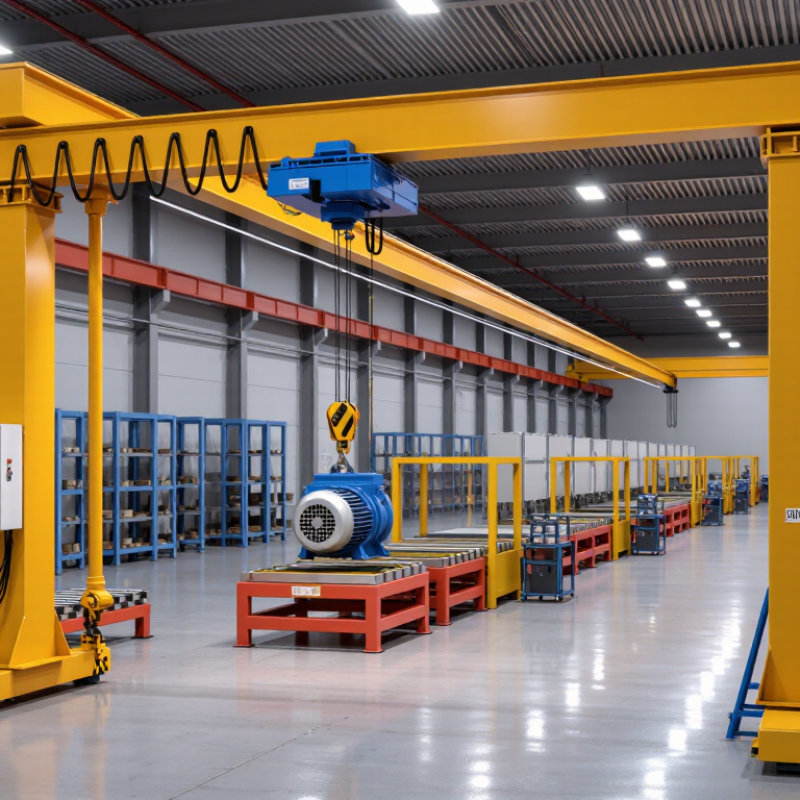
A pivot crane is a lifting machine with a rotating arm, often called a jib. It moves loads across a working area without relocating its base. The arm pivots around a fixed column or wall-mounted point. A trolley travels along the arm, while a hoist raises and lowers the load. In a workshop, this may mean moving a 500-kilogram motor from a pallet to a repair bench. The rotation range depends on the design. Some cranes cover a limited angle, while others approach a full circle.
Real selection depends on daily work, not impressive specifications alone. Check the safe working load, lifting height, arm length, and available floor space. A longer arm provides wider reach but can increase structural stress. Measure the mounting surface carefully. Concrete thickness, anchor quality, and column stability matter greatly. I have seen projects delayed because the crane fit the load but not the building. That mistake is expensive and avoidable. Controls should feel responsive, and emergency stopping must be easy to access.
Tips: Watch the load path during a trial lift. Keep people away from suspended loads. Inspect hooks, wire rope, brakes, bolts, and limit switches regularly. Ask for load charts, installation requirements, and inspection records. Do not rely on assumptions. A small error in capacity or clearance can affect the entire lifting operation.
How to Choose the Best Pivot Crane in 2026? - What Is a Pivot Crane and How Does It Work?
A pivot crane, commonly called a jib crane, uses a horizontal or articulated boom that pivots around a vertical mounting point. A trolley, hoist, or lifting device travels along the boom to move loads within a defined working area.
| Pivot Crane Configuration | How It Works | Typical Capacity | Typical Reach | Typical Rotation | Best Application |
|---|---|---|---|---|---|
| Free-Standing Pivot Crane | A vertical mast is fixed to a reinforced foundation or base. The boom pivots around the mast while a trolley positions the load. | Approximately 250 kg–10,000 kg | Approximately 2–8 m | Typically 180°–360° | Production areas, machine loading, outdoor yards, and workstations without suitable columns |
| Wall-Mounted Pivot Crane | The boom is attached to a structural wall or column and swings horizontally to serve an adjacent work area. | Approximately 125 kg–5,000 kg | Approximately 1.5–6 m | Typically 180°–200° | Workstations beside reinforced building columns or walls |
| Base-Plated Pivot Crane | A mast is secured to a designed steel base plate and anchor-bolt arrangement, allowing the crane to be installed on an existing slab when structural capacity is adequate. | Approximately 250 kg–5,000 kg | Approximately 2–6 m | Typically 180°–360° | Indoor facilities where foundation work must be minimized |
| Articulated-Arm Pivot Crane | Two connected boom sections pivot at separate joints, allowing the hook to reach around obstacles and into corners. | Approximately 50 kg–1,000 kg | Approximately 1–4 m | Often up to 270°–360° combined movement | Ergonomic lifting, assembly benches, tooling, and confined work cells |
| Under-Braced Pivot Crane | The boom is supported by a tie rod or brace above it, reducing boom deflection and allowing efficient coverage of a workstation. | Approximately 125 kg–2,000 kg | Approximately 2–6 m | Typically 180°–360° | Light and medium-duty lifting where overhead clearance is available |
Key Selection Criteria for 2026
| Selection Dimension | What to Check | Practical Recommendation |
|---|---|---|
| Rated Load Capacity | Maximum lifted load, including lifting accessories, and the load moment at the farthest reach | Select a rated capacity above the heaviest planned load; do not treat a safety margin as permission to exceed the rated load. |
| Horizontal Reach | Distance from the pivot centerline to the hook operating zone | Choose the shortest reach that covers the required area because capacity generally decreases as reach increases. |
| Vertical Lift | Required hook height, overhead obstructions, and the height of the load | Allow clearance above the load and account for the hoist body, hook block, slings, and possible load sway. |
| Rotation and Coverage | Required swing angle, nearby equipment, aisles, walls, and collision zones | Use a 180° model for a wall-side station and a 270°–360° model when the load must move around a larger work area. |
| Mounting Structure | Slab thickness, concrete strength, anchor layout, wall or column strength, and foundation requirements | Have a qualified structural professional verify the supporting structure before installation. |
| Duty Cycle | Lifts per hour, operating hours per day, load spectrum, and starting frequency | Choose the hoist and crane duty classification based on actual usage rather than maximum load alone. |
| Power and Controls | Available voltage, manual or powered rotation, pendant controls, radio controls, and emergency-stop requirements | Use powered movement for frequent lifting and manual movement for light, occasional workstation handling. |
| Environment | Indoor or outdoor installation, dust, moisture, corrosive chemicals, temperature, and wind exposure | Specify suitable protective finishes, electrical enclosures, drainage, and outdoor wind restraints where required. |
| Safety and Compliance | Applicable local regulations, rated-load markings, limit devices, guards, inspections, and operator training | Confirm compliance with applicable lifting-equipment regulations and recognized crane safety standards before operation. |
Data note: Capacity, reach, and rotation figures are representative ranges for commonly specified pivot and jib crane configurations. Actual limits depend on boom length, mounting method, structural design, hoist selection, duty cycle, and applicable local regulations. Always verify the final design with the equipment supplier and a qualified structural professional.