
• Gantry Robot Manufacturer & Articulated Arm Integrator

How to Choose the Right ASRS Racking System for Your Warehouse?

In today's fast-paced warehouse environments, selecting the appropriate ASRS racking system is crucial. A well-designed system can enhance storage efficiency by up to 60%. According to a recent study by the Warehousing Education and Research Council (WERC), over 70% of warehouses reported improved inventory accuracy when using advanced racking solutions. This highlights the importance of making informed decisions in choosing an ASRS racking system.

Choosing the right system involves considering factors such as warehouse layout, product characteristics, and throughput requirements. An ideal ASRS racking system not only maximizes space but also reduces labor costs. However, it can be a daunting task. Many companies regret their investment in an unsuitable system. Therefore, reflecting on past experiences and learning from others can provide valuable insights.

Moreover, maintaining flexibility is essential in a continuously evolving market. The right ASRS racking system should allow for future scalability. Implementing a system that is not adaptable can result in wasted resources. This further emphasizes the need for careful planning and consideration during the selection process. By understanding the nuances of various ASRS racking systems, warehouses can thrive in an increasingly competitive landscape.

How to Choose the Right ASRS Racking System for Your Warehouse?

Understanding ASRS: What is an Automated Storage and Retrieval System?

Automated Storage and Retrieval Systems (ASRS) play a crucial role in modern warehouses. These systems enhance efficiency by automating the storage and retrieval of products. ASRS technology can significantly reduce labor costs while increasing storage density. Many businesses rely on these systems to keep pace with growing inventory demands.

Understanding ASRS is essential for making an informed choice. These systems work using a range of automated devices like shuttles and cranes. They store items in a high-density layout, maximizing space usage. The complexity of the system can vary widely. Some ASRS implementations require detailed planning and engineering. Others may suit smaller operations with simpler needs. Choosing the wrong system can lead to inefficiencies or increased costs.

Evaluating an ASRS requires careful consideration. It’s crucial to assess your warehouse layout and product types. The system must align with your operational goals. It’s also vital to consider integration with existing processes. Poor integration can hinder performance rather than enhance it. Learning from past implementations can provide valuable insights. Not all ASRS solutions will fit every warehouse. Balancing needs with available technology is key to success.

How to Choose the Right ASRS Racking System for Your Warehouse?

Feature Description Considerations
System Type There are various types of ASRS systems, including unit load, mini-load, and shuttle systems. Analyze the type of products to be stored and their sizes.
Storage Density The ASRS should maximize the use of vertical and horizontal space. Evaluate the building height and aisle width for optimal layout.
Throughput Capacity How many items can be stored and retrieved in a given time period. Consider current and future inventory turnover needs.
Integration Compatibility with existing inventory management systems. Check for API options and software compatibility.
Cost Initial investment, maintenance, and operational costs. Evaluate long-term ROI versus upfront expenses.
Flexibility Ability to adapt to changes in product types and storage needs. Choose a system that can be easily upgraded or modified.

Key Factors to Consider When Choosing ASRS Racking Systems

When selecting the right Automated Storage and Retrieval System (ASRS) racking system, several key factors come into play. Space optimization is crucial. Evaluate your warehouse layout and see how many items you need to store. A well-designed ASRS can significantly reduce aisle space and increase storage density. Consider the height of your warehouse. Taller systems can utilize vertical space effectively.


Next, think about the types of products you'll be storing. Different items may require specific handling conditions. Fragile items might need gentle storage solutions. Bulk items, on the other hand, may require more robust systems. Understanding these requirements helps in choosing the right racking configuration.


Integration with your existing warehouse management system is another factor. The system must communicate well with your current software to streamline operations. Additionally, think about the scalability of the ASRS. Your needs may change as your business grows. Building flexibility into your racking system can save you time and resources later on.

Types of ASRS Racking Systems: An Overview of Options Available

Choosing the right Automated Storage and Retrieval System (ASRS) racking system can be challenging. Various types cater to different warehouse needs. Understanding these types will help optimize your storage space and improve efficiency.

There are several ASRS racking systems available. For instance, unit load ASRS systems are ideal for large, heavy items. They provide high density storage and reduce labor costs significantly. Another type is mini-load systems, which are designed for smaller items. These systems enhance picking accuracy and speed. Both types have their own unique advantages and limitations.

In addition to these, carousels and pallet shuttles offer different functionalities. Carousels automate the retrieval of small goods efficiently. However, they may require a more extensive upfront investment. Pallet shuttles can handle high-volume palletized loads. Nonetheless, they face challenges in adaptability for varying item sizes. Evaluating your specific needs is crucial in selecting the best ASRS racking system. Each option presents its own set of strengths and weaknesses.

Evaluating Warehouse Space and Layout for ASRS Implementation

When evaluating warehouse space for implementing an Automated Storage and Retrieval System (ASRS), understanding the layout is crucial. Assess your current storage density. High-density storage can benefit more from ASRS efficiency. Is your warehouse space underutilized? Measure aisle width and racking height to ensure compatibility with ASRS equipment.

Tips: Visualize the workflow. Sketch the current layout and identify bottlenecks. This will help you see potential improvements.

Consider the shape of your warehouse. Oddly-shaped warehouses may not easily accommodate ASRS systems. Look at areas where products frequently move. Position ASRS near these zones to streamline operations. Don't overlook ceiling height. Higher ceilings allow for taller racking, maximizing vertical space.

Tips: Engage with staff to gather insights. They know where inefficiencies exist and can offer practical solutions.

Finally, think about future growth. Choose a system that can adapt to changes in inventory. Flexible designs can save costs in the long run. However, do consider the complexity of installation and training. An overly complex setup might hinder rather than help productivity.

Tips: Create a checklist for essential features before selecting an ASRS. This will keep your priorities clear.

Warehouse Space Utilization by ASRS Racking System Type

This chart illustrates the space utilization percentages of various Automated Storage and Retrieval System (ASRS) racking systems. A higher percentage indicates better utilization of warehouse space.

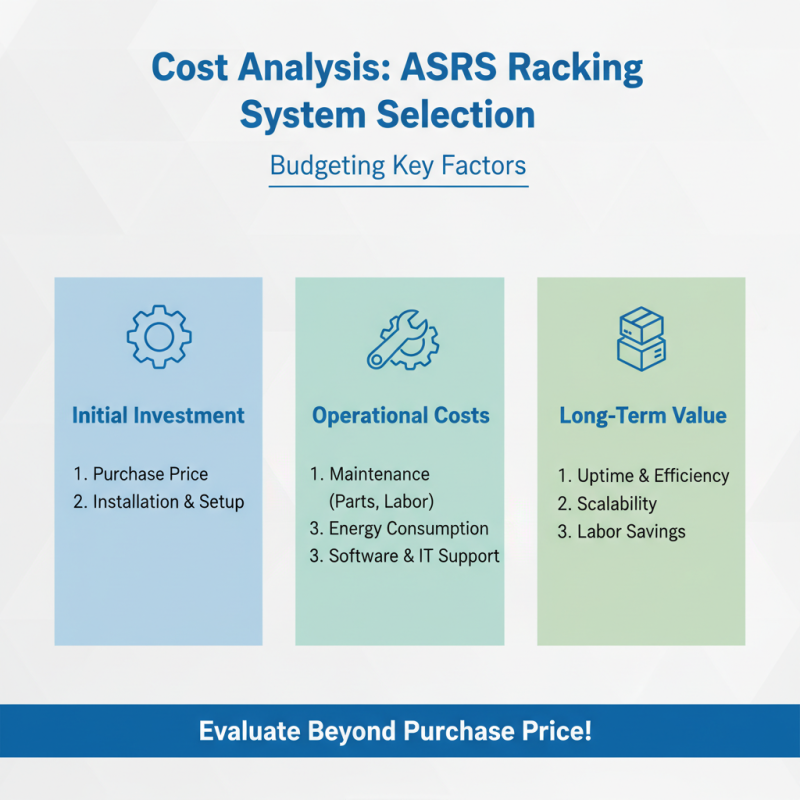
Cost Analysis: Budgeting for Your ASRS Racking System Selection

How to Choose the Right ASRS Racking System for Your Warehouse?

When selecting an Automated Storage and Retrieval System (ASRS) racking system for your warehouse, cost is a critical factor. Budgeting for an ASRS requires a clear understanding of your operational needs. Evaluate the initial purchase costs and installation expenses. Often, companies overlook maintenance and operational costs. These expenses can accumulate significantly over time.

Consider the space requirements and the volume of inventory. A more complex system may have higher upfront costs but could lead to long-term efficiency gains. However, reflect on whether your current needs justify the expenditure. Flexibility in design might save costs if your inventory fluctuates. Don't shy away from seeking expert opinions. They can provide insights that might not be immediately apparent during the selection process.

It's essential to calculate the return on investment. A high initial investment may seem daunting but can lead to increased efficiency. Review case studies of similar warehouses. They can illuminate potential pitfalls and unexpected costs in the future. Remember, the best choice isn't always the most expensive or the most sophisticated system available. It must fit within your operational reality.