China Top 10 Integrated Supply Chain Management Companies
China’s top 10 Integrated Supply Chain Management companies reflect the country’s expanding role in global manufacturing and logistics. They connect suppliers, factories, warehouses, ports, retailers, and customers through coordinated planning and technology.
In practice, their work may begin with a supplier order in Guangdong and end with a tracked delivery in Europe. Reliable systems can reduce inventory delays, improve shipment visibility, and support faster production decisions. Some companies manage ocean freight, customs documentation, cold-chain storage, and last-mile distribution under one operating model. Others focus on digital platforms, procurement services, or specialized industrial logistics.
This overview considers practical performance rather than market size alone. Key factors include network coverage, warehouse capacity, transportation coordination, technology investment, service consistency, and risk management. Public company information, operating records, customer experience, and industry reputation also matter. A strong provider should explain its processes clearly and measure results with useful indicators, such as delivery accuracy, order cycle time, inventory turnover, and response speed.
No ranking is flawless.
Supply chains change quickly. Weather, port congestion, changing trade policies, and supplier disruption can affect results within days. A company that performs well in one sector may offer weaker support in another. That limitation deserves attention. The following selection therefore offers a practical starting point, not an absolute verdict. Readers should compare current capabilities, regional coverage, compliance standards, and contract terms before choosing a long-term partner. This approach provides a more balanced view of China’s leading supply chain service providers.
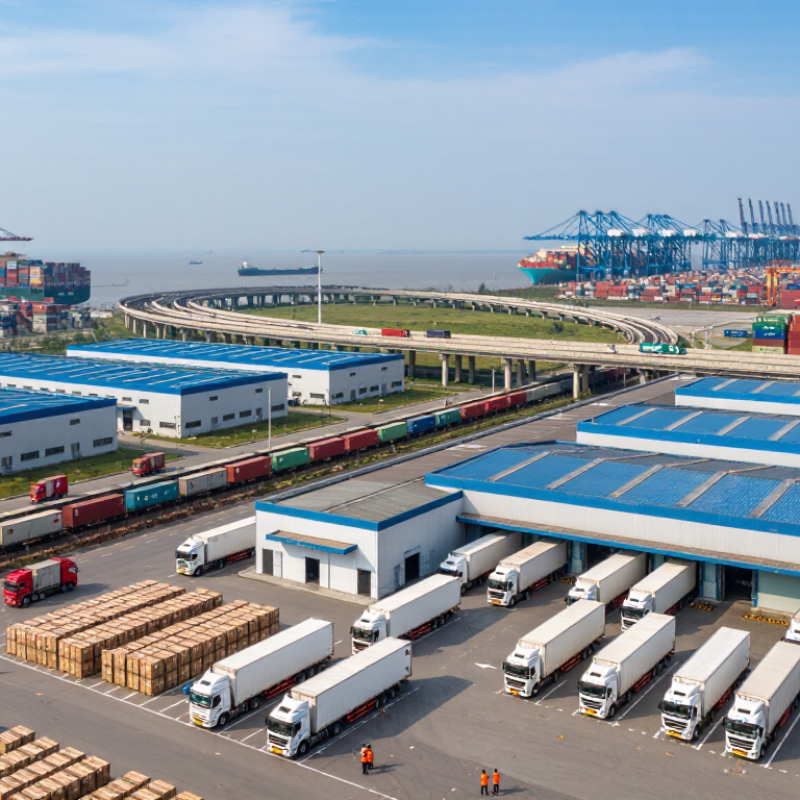
Definition and Scope of Integrated Supply Chain Management in China
In China, integrated supply chain management means coordinating the full product journey. It covers demand planning, sourcing, production, warehousing, transportation, customs, delivery, and returns. The scope is wider than logistics. It also includes supplier risk, inventory policy, data governance, carbon monitoring, and service quality.
Scale makes integration essential. The China Federation of Logistics and Purchasing reported total social logistics value of approximately RMB 352.4 trillion in 2023. The sector grew by 5.2% year on year. However, total logistics costs remained about 14.4% of GDP. This suggests that digital visibility alone has not removed structural inefficiencies. Warehouse handoffs, fragmented regional networks, and inconsistent data still create delays.
A practical assessment should examine control across three layers. The first layer connects orders, suppliers, plants, and distribution centers. The second measures lead time, inventory turnover, delivery accuracy, and exception response. The third tests resilience during demand shocks or transport disruption. The 2023 World Bank Logistics Performance Index placed China 19th globally, with a score of 3.7 out of 5. Strong infrastructure helps, but performance is not uniform across regions. That matters.
A top integrated provider should therefore offer measurable coordination, not only transportation capacity. Some evaluations still overvalue warehouse scale. That is a weakness. Reliable integration requires shared data, accountable operating teams, and evidence from comparable supply networks.
China Top 10 Integrated Supply Chain Management Companies — Definition and Scope of Integrated Supply Chain Management in China
Integrated supply chain management in China covers procurement, manufacturing, transportation, warehousing, distribution, inventory coordination, and digital information integration. The chart uses China’s total social logistics value as an industry-level indicator of supply-chain activity and does not rank or disclose individual companies.
Data source: China Federation of Logistics and Purchasing and National Bureau of Statistics of China. Total social logistics value increased from approximately RMB 300.1 trillion in 2020 to RMB 360.6 trillion in 2024.
Selection Criteria for Ranking the Top 10 Supply Chain Management Companies
Ranking China’s top integrated supply chain management companies requires more than counting revenue or warehouse space. The evaluation should examine end-to-end capability, from supplier coordination and procurement to transport, storage, distribution, and returns. Companies with strong regional coverage deserve attention, but network size alone can mislead. A smaller operator may deliver better control in specialized industries.
Operational evidence should carry significant weight. Useful indicators include on-time delivery, inventory accuracy, order cycle time, damage rates, and response speed during disruptions. Audited performance records are more reliable than promotional claims. Reviewers should also inspect warehouse processes, staff training, digital tracking, and supplier communication. A dashboard looks impressive. It does not prove consistent execution.
The ranking should assess technology without treating technology as a shortcut. Integrated platforms, demand forecasting, shipment visibility, and data security can improve decisions. Yet poor data still produces poor results. Customer references, contract transparency, compliance systems, and financial stability also matter. Companies should explain how they manage disruptions, labor standards, and environmental responsibilities. Some published metrics may be incomplete, so independent verification is necessary. That limitation deserves clear disclosure. A practical assessment might combine service quality, resilience, technology, coverage, expertise, and verified customer outcomes. The weighting should be reviewed regularly, because market conditions change quickly.
Profiles of China’s Top 10 Integrated Supply Chain Management Companies
China’s top ten integrated supply chain management companies operate across procurement, warehousing, transportation, and distribution. Their strength lies in connecting these functions through shared data and coordinated planning. Some manage temperature-controlled storage, while others focus on industrial materials, retail goods, or international freight. The strongest profiles show measurable coverage, stable delivery performance, and clear risk controls.
Each company profile should examine its network design, technology use, and customer support process. A reliable operator can trace an order from factory loading to final delivery. It can also adjust routes when ports become congested or demand changes suddenly. Experienced teams often combine regional warehouses with national transport corridors. They monitor inventory using scanning systems, shipment alerts, and regular supplier reviews.
The ranking is not flawless. Public information differs widely between companies, making direct comparisons difficult. Some firms report warehouse capacity but reveal little about delayed orders or recovery costs. That gap deserves attention. A professional evaluation should review service records, employee expertise, data security, and compliance practices. It should also consider how each company handles damaged goods, forecast errors, and unexpected disruptions. Real performance appears under pressure. Not in brochures.
Core Services and Industry Sectors Served by These Companies
China Top 10 Integrated Supply Chain Management Companies
Core Services and Industry Sectors Served by These Companies
Integrated supply chain providers combine procurement, freight planning, warehousing, customs support, and inventory control. Their digital control towers connect supplier orders with transport milestones and warehouse scans. The World Bank’s 2023 Logistics Performance Index highlights reliability, tracking, and shipment timeliness as critical performance factors. Operational audits often reveal a simple weakness: data arrives too late. No dashboard fixes that.
These companies serve automotive, electronics, healthcare, retail, food, industrial equipment, and renewable energy sectors. Automotive clients need synchronized components and sequencing near assembly plants. Healthcare networks require temperature monitoring, validated storage, and accurate product records. Retail operations depend on seasonal forecasting, rapid fulfillment, and reverse logistics. UNCTAD’s Review of Maritime Transport 2023 reports that shipping carries over 80% of global merchandise trade by volume, making port disruption a serious planning risk. Yet many plans still underestimate local trucking delays.
Tips: Compare providers by sector expertise, service-level evidence, and recovery procedures. Request sample milestone reports. Test their response to a delayed container. Also check whether inventory data updates hourly or daily. Small details matter. A practical review should measure cost, delivery accuracy, stock availability, and emissions together. Overlooking one metric can distort the entire decision.