Top 10 Benefits of Using Pick and Place Robots Today?
In today's fast-paced manufacturing landscape, the adoption of pick and place robots has transformed operational efficiency. Experts like Dr. Emily Chen, a robotics authority, emphasize, “These robots not only enhance productivity but also improve accuracy in repetitive tasks.” The integration of pick and place robots allows industries to streamline production lines. This technology reduces human error and increases output.
The benefits are significant. Businesses witness a decrease in labor costs and can allocate resources more effectively. Moreover, these robots are adaptable and can be programmed for various applications, from electronics to food packaging. As industries embrace automation, they find themselves facing challenges as well. Ensuring seamless integration with existing systems and managing workforce transitions demand consideration.
Yet, the journey is not without its imperfections. Some facilities struggle to optimize their processes fully. Making the most of pick and place robots requires continuous learning and adaptation. Organizations must reflect on how they can leverage this technology while acknowledging its limitations. This thought emphasizes the importance of developing a robust framework for implementation in the evolving robotics industry.
Benefits of Increased Efficiency in Manufacturing Processes
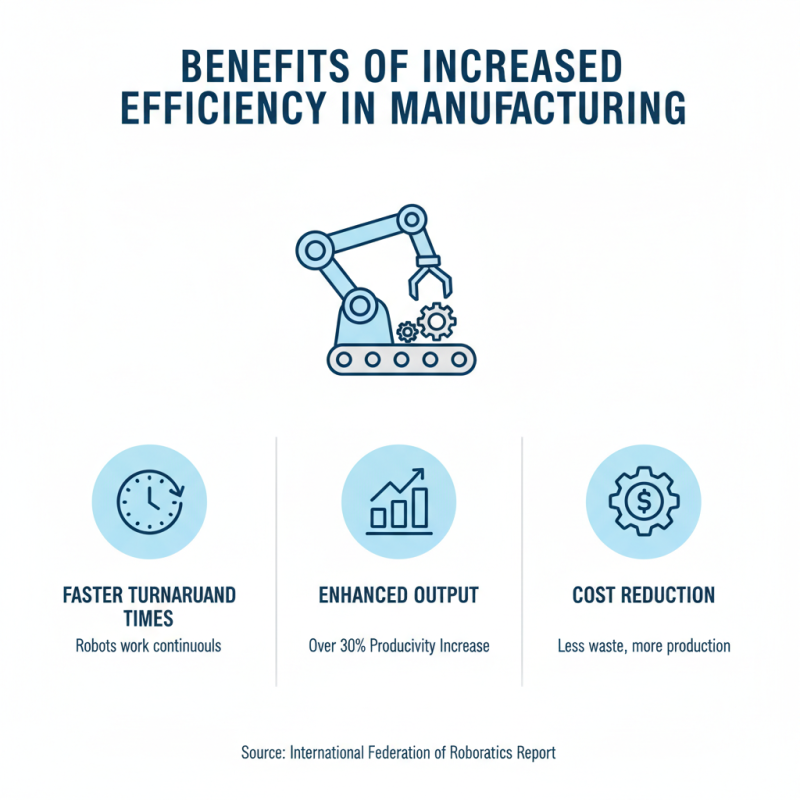
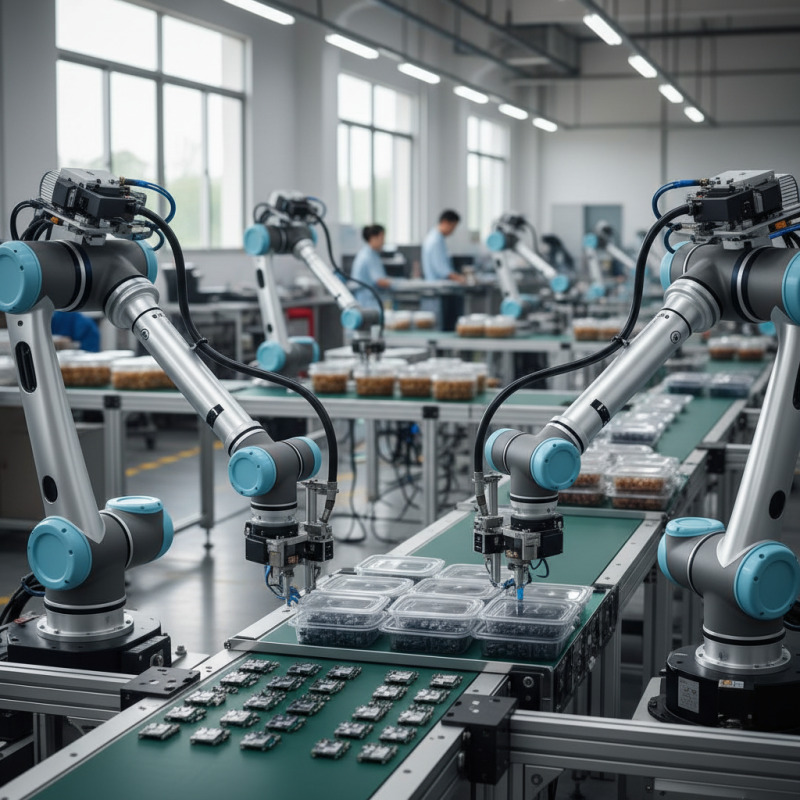
In today's fast-paced manufacturing landscape, pick and place robots are revolutionizing processes. Their efficiency is unmatched. According to a report by the International Federation of Robotics, industries using these robots have seen productivity increase by over 30%. This surge translates into faster turnaround times and enhanced output.
The automation of repetitive tasks allows human workers to focus on more complex activities. With advanced vision systems, pick and place robots can handle various items. A study by McKinsey revealed that automating these processes can save companies up to 60% in labor costs. However, some businesses hesitate. The initial investment can be daunting, and ROI isn't guaranteed without proper implementation strategies.
While robots may streamline processes, they are not infallible. Reliance on automation can lead to skill gaps in the workforce. It's essential to balance robotic assistance with human oversight. Many companies report a learning curve when integrating automation. Regular assessments are crucial to maximize efficiency and avoid costly mistakes. Embracing robotics requires a mindful approach to training and adaptation.
Cost Savings Through Automation and Reduced Labor Costs
The rise of pick and place robots marks a significant shift in automation. According to recent industry reports, businesses can save up to 25% on labor costs when integrating these technologies. Automation allows companies to streamline processes, reducing the need for manual handling in repetitive tasks. This transition not only boosts productivity but also decreases human error associated with labor-intensive jobs.
Implementing pick and place solutions can lead to faster production cycles. In fact, statistics show that companies experience a 30% reduction in cycle time after deployment. However, assessing the initial investment is crucial. Some businesses may underestimate the setup costs, which can hinder their long-term savings. Therefore, conducting a detailed cost-benefit analysis is essential.
Tip: Start by identifying tasks that are labor-heavy. Evaluate how automation could improve efficiency. Also, consider pilot programs if full-scale implementation seems daunting. Rethink workforce allocation as robots take over mundane tasks, allowing employees to focus on higher-value activities. Embracing automation invites both challenges and rewards, prompting constant reflection on operational strategies.
Top 10 Benefits of Using Pick and Place Robots Today - Cost Savings Through Automation and Reduced Labor Costs
| Benefit |
Description |
Estimated Cost Savings (%) |
| Increased Efficiency |
Robots can operate continuously without fatigue, increasing throughput. |
20% |
| Reduced Labor Costs |
Automation reduces the need for manual labor, leading to lower payroll expenses. |
30% |
| Improved Accuracy |
Robots offer precise handling, minimizing errors in product placement. |
15% |
| Faster Production Times |
Robots can drastically reduce the time taken for repetitive pick and place tasks. |
25% |
| Space Optimization |
Compact robots can work in tighter spaces, improving layout efficiency. |
10% |
| Enhanced Safety |
By automating dangerous tasks, workplace injuries are reduced. |
5% |
| Consistency in Quality |
Robots deliver uniform quality, which is vital in high-precision industries. |
15% |
| Scalability |
Easily scale operations by adding more robots as demand increases. |
20% |
| Better Resource Management |
Reduced waste and improved utilization of materials through optimized processes. |
18% |
| Long-Term Investment |
Robots provide a solid ROI over time, justifying upfront costs. |
25% |
Enhanced Precision and Consistency in Product Sorting
In today's fast-paced manufacturing world, enhanced precision and consistency in product sorting are vital.
Pick and place robots excel in these areas, offering numerous advantages. Their ability to move items rapidly and accurately minimizes errors. This results in higher quality products and fewer misplaced items on the production line.
Employing these robots can significantly impact overall efficiency. For instance, they can sort small parts with impressive accuracy. This reduces the time spent on manual sorting, allowing workers to focus on more complex tasks. However, it's essential to keep in mind that the integration process may not always go smoothly. Training staff and adjusting workflows can be challenging.
Here are some tips to maximize the benefits of pick and place robots:
- Monitor robot performance regularly.
- Consider periodic training sessions for your team.
- Always remain open to feedback on the system's performance.
Continuous improvement leads to
better sorting accuracy and overall efficiency in production.
Flexibility in Handling a Variety of Items and Tasks
In today's rapidly evolving manufacturing landscape, flexibility is crucial. Pick and place robots offer remarkable adaptability to a variety of tasks. They can efficiently handle diverse items, from delicate electronics to heavy automotive parts. This ability reduces the need for multiple machines, saving both space and costs.
Operating in dynamic environments, these robots can quickly switch tasks. They learn different pick-and-place routines through programmed instructions. This flexibility enables manufacturers to respond swiftly to changing market demands. For instance, adjusting production lines becomes easier when robots can switch from handling small components to larger assemblies in no time.
However, relying on automation isn't without challenges. Sometimes, robots struggle with complex item shapes or fragile materials. They require ongoing calibration and maintenance to ensure precise performance. This highlights the need for continuous evaluation of robotic systems. While they provide significant advantages, manufacturers must ensure that their integration remains effective and reliable over time. Balancing machine flexibility with operational consistency remains a vital consideration.
Top 10 Benefits of Using Pick and Place Robots Today
Improvement in Workplace Safety by Minimizing Manual Handling
The use of pick and place robots has become essential in modern manufacturing.
One significant benefit is the improvement in workplace safety. By minimizing manual handling, these robots reduce the risk of injury among workers.
A recent study by the National Institute for Occupational Safety and Health (NIOSH) found that over 35% of workplace injuries are due to manual lifting and carrying.
By automating these tasks, robots help lower those injury rates significantly.
Manual handling tasks often lead to musculoskeletal disorders (MSDs). According to the Bureau of Labor Statistics,
MSDs account for over 30% of all workplace injuries. Pick and place robots alleviate this burden. They complete
repetitive tasks efficiently and reduce strain on workers. This is especially true in industries like electronics and pharmaceuticals, where precision is crucial.
While the integration of these robots is largely beneficial, challenges remain.
Initial costs and training are significant hurdles. Not all facilities have the infrastructure for robotic systems.
Furthermore, the rapid pace of technology means that frequent updates are necessary, which can cause downtime.
Companies must navigate these issues to reap the safety benefits fully. Ultimately, the shift toward automation in handling tasks shows promise,
though careful implementation is key.